Kauai Helicopter Weight Limits: Will They Weigh You?
Every Kauai helicopter tour weighs its passengers at check-in. Here is exactly what the weigh-in involves, what each listing's weight and seat policy says, and what happens if the numbers do not work out on the day.
Short answer
Yes, every operator on this roster weighs passengers at check-in, and the FAA requires a weight and balance performance plan before each flight. Individual thresholds vary by listing, from 230 lbs on one doors-off flight to 275 lbs on the private charters, and heavier passengers may need to buy an adjacent seat. Every listing states free cancellation up to 24 hours before the start time.
Yes, they will weigh you. Every operator on this roster weighs passengers at check-in, and the reason is not courtesy, it is physics and federal law. A helicopter's performance depends on total weight and where it sits in the cabin, so the FAA requires a completed performance plan before each air tour flight. This guide lays out the weigh-in, every listing's weight and seat policy exactly as printed, and what your options are if the numbers do not work out.
The short version: there is no single island-wide weight limit. Each listing sets its own threshold, most between 230 and 275 lbs per person, and most ask heavier passengers to buy an extra adjacent seat rather than turning them away. Nobody is shamed at the counter, the weigh-in is discreet and routine, and knowing your listing's policy before you book removes almost all of the stress from the process.
Will They Weigh You At Check-In?
Yes, every passenger is weighed at check-in, on every listing on this roster. The operators state this plainly, and the FAA backs it up: rule 136.75(b) requires a performance plan with weight and center-of-gravity figures before each flight. The scale reading feeds directly into that plan. It is a safety calculation, not a judgment, and staff at Kauai heliports run the same process dozens of times a day.
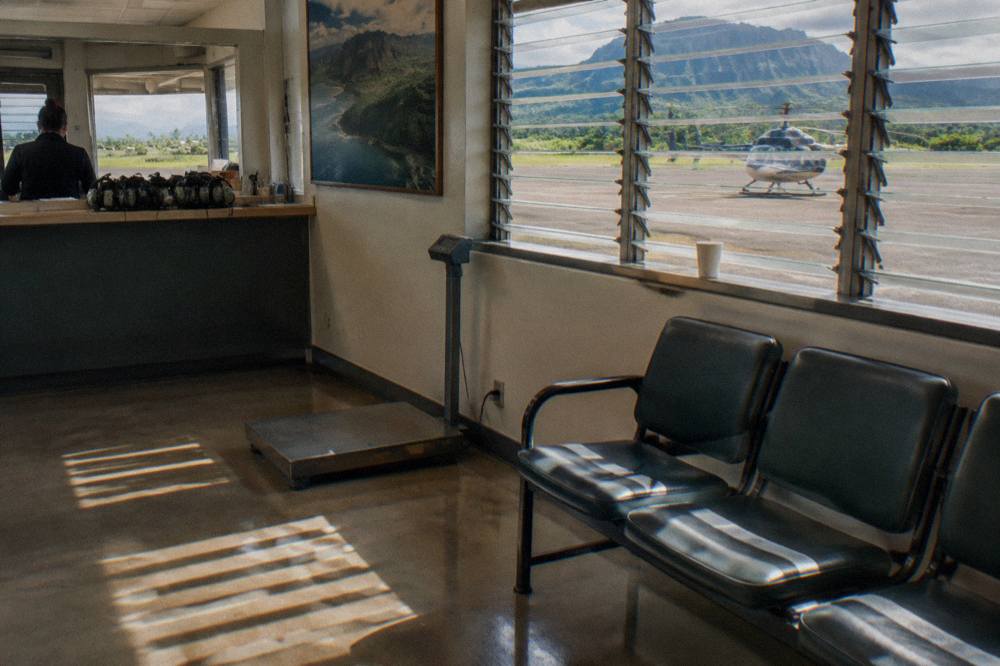
The weigh-in is usually a low-key moment at the operator's counter or heliport before boarding. You step on a scale, the staff member records the number, and it goes into the load calculation for your flight. Some operators ask for weights at booking as well, then verify at check-in, because guessed weights that drift too far from reality can shift the balance of the aircraft. The verification step is exactly why the operators print "weighed at check-in" language on their pages.
If the thought of a public scale bothers you, it helps to know how the process actually runs. The reading is typically taken at the counter rather than in front of the group, and the number is used for seat assignment as much as for the go or no-go decision. Heavier passengers are often seated in specific rows to balance the rotorcraft, which is why weight and seating are really one topic. Our guide to how Kauai helicopter seats are assigned covers that side of the process in detail.
The reason behind all of this is not bureaucratic. A helicopter hovering out of ground effect near a 4,000 ft cliff face, or lifting off from a hot apron with a full cabin, has a defined performance envelope, and weight is the biggest variable in it. The FAA's Hawaii-specific air tour rules, including the 1,500 ft minimum altitude over the state's surface, exist because the terrain here is unforgiving and the weather changes fast. The rule text at the eCFR spells out the performance-plan requirement in full.
What Is The Weight Limit On A Kauai Helicopter Tour?
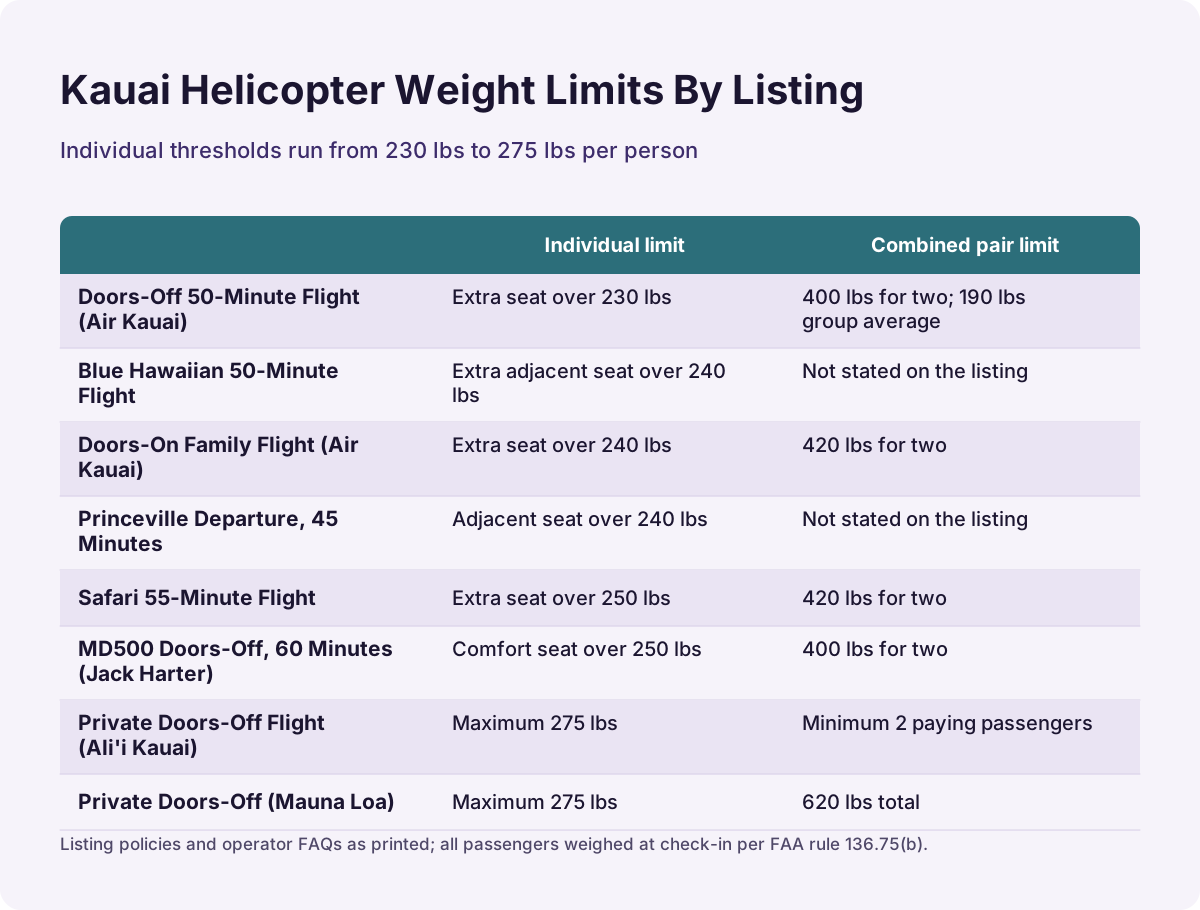
There is no universal limit. Each listing prints its own policy: the individual thresholds on this roster run from 230 lbs on the Air Kauai doors-off flight to 275 lbs on the two private charters, with most shared flights at 240 to 250 lbs. Being over the threshold rarely means being turned away; it usually means buying an extra adjacent seat so the aircraft stays balanced.
The table below is the full roster, printed exactly as each listing states its policy. Read your own listing's line before booking, because the numbers differ between operators and even between aircraft types at the same operator.
| Listing | Individual Policy (As Printed) | Combined Pair Policy (As Printed) |
|---|---|---|
| Blue Hawaiian 50-Minute Flight | Extra adjacent seat required for each guest over 240 lbs (108 kg) | Not stated on the listing |
| Safari 55-Minute, Fees Included | Additional seat required over 250 lbs | Combined 420 lbs for two people |
| Canyon Rim Landing, 90 Minutes | Additional seat required over 250 lbs | Combined 420 lbs for two people |
| Doors-On Family Flight (Air Kauai) | Extra seat required over 240 lbs | Combined 420 lbs for two people |
| Princeville Departure, 45 Minutes | Adjacent empty seat required for each guest over 240 lbs (108 kg) | Not stated on the listing |
| Doors-Off, 50-Minute Flight (Air Kauai) | Extra seat required over 230 lbs | Combined 400 lbs for two, or an average of 190 lbs for groups of three or more |
| MD500 Doors-Off, 60 Minutes (Jack Harter) | Comfort seat required over 250 lbs | Combined 400 lbs for two people |
| Doors-Off, 18-Minute Flight (Jack Harter) | Comfort seat required over 250 lbs | Combined 400 lbs for two people |
| Private Doors-Off Flight (Ali'i Kauai) | Maximum 275 lbs per passenger, weighed at check-in | Minimum 2 paying passengers |
| Private Doors-Off, All Window Seats (Mauna Loa) | Maximum 275 lbs per person | 620 lbs total |
Two patterns stand out. The private charters have the highest individual ceilings, 275 lbs per person, because the whole aircraft is yours and the operator can plan around a small, known group. The doors-off shared flights tend to have the tightest numbers, with Air Kauai's doors-off adventure at 230 lbs and a 190 lbs group average for parties of three or more, because open-door aircraft and harness configurations leave less flexibility in the load sheet.
The combined-pair limits matter as much as the individual ones. If two people flying together weigh more than the pair threshold, 400 to 420 lbs on most shared listings, one extra seat is typically required even if both are under the individual number. Couples booking the Safari flights should note the 420 lbs pair figure, and pairs on the Jack Harter MD500 flights the 400 lbs figure, before assuming a single ticket each will cover it.
If you are comparing flights with weight policy in mind, the three below span the range: the most-reviewed shared flight on the roster, a mid-priced shared alternative with fees included, and a private charter where every seat policy is worked out for your group alone.
The Blue Hawaiian 50-minute eco flight, the roster's most-reviewed listing at 4.8 from 2,065 reviews, from $489 per person, requires an extra adjacent seat for each guest over 240 lbs (108 kg). The Safari 55-minute waterfall flight, 4.8 from 963 reviews and from $336 per person with fees and taxes included, sets its line at 250 lbs individually or 420 lbs combined for two. The Mauna Loa private doors-off flight, 4.8 from 522 reviews and from $384 per person, allows up to 275 lbs per person and 620 lbs total, with every passenger on a window seat.
Which Operators Require A Comfort Or Extra Seat?
Most of them, above their own threshold. Safari's FAQ states 250 lbs or more may need an Extra Comfort Seat; Blue Hawaiian's FAQ sets front-row combined limits of 319 lbs on the A-Star and 470 lbs on the Eco-Star; Jack Harter's policy is 250 lbs individual or 400 lbs per pair. The private charters cap at 275 lbs per person instead of selling extra seats.
The "comfort seat" is the industry's honest answer to a real problem: a helicopter cabin has fixed seating, and one passenger's weight can push a row or the whole aircraft outside its balance envelope. Buying the adjacent seat does two things at once, it gives you the physical room of two seats and it lets the operator load the aircraft legally and safely. Operators are explicit that the policy is about physics, not about the person.
| Operator | FAQ Or Listing Policy (Attributed) | Source |
|---|---|---|
| Safari Helicopters | 250 lb or more may need an Extra Comfort Seat; combined 420 lb or over for two; weighed at check-in; lap child under 24 months and under 25 lb | Safari FAQ |
| Blue Hawaiian Helicopters | Front-row seats combined under 319 lb (A-Star) or 470 lb (Eco-Star); individual under 250 lb (A-Star) or 260 lb (Eco-Star) | Blue Hawaiian FAQ |
| Jack Harter Helicopters | 250 lb individual, 400 lb per pair, extra adjacent seat required | Operator policy pages |
| Air Kauai Helicopters | Extra seat over 230 lbs on the doors-off flight, over 240 lbs on the doors-on flight | Listing |
| Mauna Loa Helicopters | Maximum 275 lb per person, 620 lb combined on the private charter | Listing and operator FAQ |
| Ali'i Kauai Air Tours & Charters | Maximum 275 lbs per passenger, weighed at check-in | Listing |
The Safari FAQ page and the Blue Hawaiian FAQ are worth reading directly, because both operators explain the reasoning and not just the numbers. Safari frames the Extra Comfort Seat as a standard product, bookable like any other seat, and Blue Hawaiian's front-row limits exist because the front row sits ahead of the rotor mast where weight has the largest effect on balance.
A note on tone, because this topic carries more anxiety than it deserves. Nothing in any of these policies is a judgment about body size. The thresholds come from aircraft flight manuals, and the operators apply them the same way to a tall passenger with heavy camera gear and to anyone else. Staff at Kauai heliports handle the conversation quietly at the counter, and the most common outcome is simply a seat assignment that balances the cabin.
Do Plus-Size Passengers Fit On Kauai Helicopter Tours?
In most cases, yes, with the right listing. The practical ceiling is 275 lbs per person on the two private charters, and 250 lbs on the Safari shared flights before an extra seat is required. An extra or comfort seat genuinely doubles your space, and operators sell it for exactly that purpose. The one hard wall is the private charters' 275 lb maximum, which cannot be bought around.
Choosing the right listing is the real strategy. If your weight is above 240 lbs, the Safari shared flights at a 250 lb threshold and the Jack Harter MD500 doors-off flights at 250 lbs give you the widest shared-cabin margin. If you are above 250 lbs, the private charters at 275 lbs are the listings most likely to work without an extra seat, and a private cabin has the added benefit of no strangers and no middle seat.
The extra-seat route deserves honest framing. On the shared listings, buying the adjacent seat is a normal, routine purchase, and it means the armrest comes up and you get two seats' worth of width. The cost of a comfort seat is set by each operator and is printed on the live listing, so check there before you book rather than relying on secondhand figures. What the roster does confirm is the refund side: every listing on it offers free cancellation up to 24 hours before the start time for a full refund.
If the weight policy is the deciding factor for your group, this mid-guide check is worth a minute.
The Blue Hawaiian 50-minute eco flight, from $489 per person, is a strong fit for groups where most passengers sit under the 240 lbs line, since only guests over that threshold need the extra adjacent seat. It is also the most-reviewed flight on the roster, 4.8 from 2,065 reviews, so the check-in process is well-trodden and quick. You can read the full listing on the Kauai Eco Adventure Helicopter Tour page, or Check availability for your dates.
What Are The Age And Child Policies?
Minimum ages vary by listing, not by law: the doors-off flights require passengers to be at least 10, the private charters allow ages 7 and up, and the doors-on shared flights state no minimum age on their listings. Infants under 24 months ride on a lap on the Air Kauai doors-on flight. Weight still applies to children on the scale-based listings.
The age lines matter here because they interact with weight. A 10-year-old on a doors-off flight is also weighed, and the group-average rules on Air Kauai's doors-off listing, 190 lbs average for groups of three or more, mean a light child can offset a heavier adult in the same party. On the private flights, the Ali'i charter requires a minimum age of 7 and at least 40 lbs, and Mauna Loa's listing states ages 7 to 11 sit next to a closed door.
| Listing | Minimum Age (As Printed) | Child Notes (As Printed) |
|---|---|---|
| Blue Hawaiian 50-Minute Flight | Not stated | None on the listing |
| Safari 55-Minute, Fees Included | Not stated | None on the listing |
| Canyon Rim Landing, 90 Minutes | Not stated | None on the listing |
| Doors-On Family Flight (Air Kauai) | Not stated | Infants under 24 months ride on a lap |
| Princeville Departure, 45 Minutes | Not stated | Wheelchair accessible |
| Doors-Off, 50-Minute Flight (Air Kauai) | 10 (16 for an outside or edge seat) | Goggles supplied; only a lanyarded phone allowed on board |
| MD500 Doors-Off, 60 Minutes (Jack Harter) | 10 | Small group of at most 4 passengers |
| Doors-Off, 18-Minute Flight (Jack Harter) | 10 | Small group of at most 4 passengers |
| Private Doors-Off Flight (Ali'i Kauai) | 7 (and at least 40 lbs) | Minimum 2 paying passengers |
| Private Doors-Off, All Window Seats (Mauna Loa) | 7 (ages 7 to 11 sit next to a closed door) | Life preservers supplied |
Families weighing the whole picture, pun intended, will find more detail in our guide to Kauai helicopter tours with kids. The short version for this page: a family of four on a shared flight is assessed as four weights and a combined load, and a lighter child can genuinely help a heavier parent pass the pair or group thresholds on some listings.
Why Weight And Balance Matter So Much On A Helicopter?
Because a helicopter's center of gravity is a live number. Unlike an airliner, a tour helicopter's balance point shifts with every passenger's position, and flying outside the envelope affects hover performance, control authority and fuel margins. The FAA requires a performance plan before each flight precisely because a misloaded rotorcraft can be unflyable even when total weight is under the maximum.
The rules are specific to Hawaii air tours. Under 14 CFR Part 136, Subpart D, an operator must complete a performance plan covering weight, center of gravity and hover limits per the flight manual before every air tour flight. The same subpart requires flotation gear for single-engine rotorcraft beyond the shore and a pre-takeoff briefing on ditching and egress for ocean segments, which on Kauai is essentially every flight, since the Na Pali Coast and Waimea Canyon routes cross or follow the shoreline.
That regulatory backdrop explains why the weigh-in is non-negotiable and why guessed weights are verified. It also explains the pair limits: two passengers whose combined weight crosses a pair threshold are a different seating problem than one passenger over the individual line. The load sheet, not the scale, is the document that decides where everyone sits.
Kauai's terrain raises the stakes further. The Na Pali cliffs run up to 4,000 ft, the Waimea Canyon system stretches about 14 miles with depths up to 3,600 ft, and the Waialeale summit sits at 5,148 ft in one of the wettest spots on earth, averaging about 450 inches of rain a year. Flights into that terrain need every bit of the hover and climb performance the flight manual promises, which only exists if the load calculation was done with real numbers.
What Happens If You Are Over The Limit At Weigh-In?
The operator's staff will work through your options at the counter: on the shared listings that usually means buying the extra seat, on the private charters a passenger over 275 lbs cannot fly that day. If neither works, every listing on this roster states free cancellation up to 24 hours before the start time for a full refund, and weather or maintenance cancellations are rescheduled or refunded per the operators.
The worst-case scenario is smaller than most travelers fear. The realistic bad outcomes are two: you buy an extra seat you had not budgeted for, or the flight cannot be balanced that day and you are refunded. Nobody is weighed in front of a queue of strangers and announced to the cabin. The conversation happens at the counter, quietly, and the operators run it many times a day.
The refund terms are the safety net. Every listing on this roster prints free cancellation up to 24 hours before the start time, for a full refund, and the operators' own pages state that weather or maintenance cancellations are rescheduled or refunded. If a weight issue is discovered at check-in, ask the staff about the operator's policy on the spot rather than assuming; the listing's cancellation terms are the baseline you know before you arrive.
Booking with the policy in mind beats arriving and hoping. If your weight is near a threshold, pick the listing with the higher number, book the extra seat in advance where the listing allows it, or choose a private charter where the whole load is planned around your group. Our doors-off helicopter guide for Kauai covers the tighter doors-off numbers, including the 16-year minimum for the outside seats on the Air Kauai doors-off flight, if that format is on your list.
Which Kauai Flights Have The Most Flexible Weight Policies?
The private charters, by a clear margin. The Ali'i Kauai private doors-off flight and the Mauna Loa private doors-off flight both allow up to 275 lbs per passenger, with Mauna Loa's listing printing a 620 lbs total. Among shared flights, the Safari listings at 250 lbs individual and 420 lbs per pair are the roomiest, and both include free cancellation up to 24 hours out.
The Canyon Rim Landing flight is Safari's 90-minute flagship, 4.8 from 392 reviews and from $396 per person, with the same 250 lbs and 420 lbs pair policy as the shorter Safari flight. It sets down on the rim of Olokele Canyon for a walk-around, then covers Na Pali and Waimea Canyon from the air. One guest review on the listing sums up the family experience: "They were great with our kids as well."
For travelers set on doors-off, the Air Kauai doors-off adventure is the most-reviewed open-door flight on the roster, 4.8 from 545 reviews and from $402 per person, with goggles supplied and a minimum age of 10. Its weight policy is the tightest on the roster, 230 lbs individual, 400 lbs per pair, or a 190 lbs group average for three or more, so read that line carefully before booking a party. One guest review calls it "stunningly beautiful - worth every penny!!"
At the other end of the scale, the Ali'i Kauai private doors-off flight removes the strangers-from-the-cabin variable entirely: your group only, a minimum of two paying passengers, up to 275 lbs per person, and a 75-minute route over Na Pali, Waimea Canyon, Hanalei Bay and Manawaiopuna Falls. It carries 5.0 from 1,794 reviews, from $425 per person, and one review describes a pilot who "helped calm my father's nerves before taking off."
A quick planning summary ties the roster together. This site, Helicopter Tours Kauai, keeps the live from-prices and policies on each tour page, and the table below condenses the decision.
| If Your Situation Is... | The Listings That Fit Best | Why |
|---|---|---|
| Under 230 lbs, any format | Any listing on the roster | Below every printed threshold |
| Over 230 lbs, shared cabin | Safari flights, Jack Harter MD500 flights | 250 lb line before an extra seat |
| Over 250 lbs | Ali'i private, Mauna Loa private | 275 lb maximum, no extra seat to buy |
| A pair over 400 lbs combined | Safari flights (420 lb pair limit) | Highest pair threshold on the roster |
| A group of three or more | Air Kauai doors-off (190 lb average) or a private charter | Group average or whole-cabin planning |
One last practical note on timing. Reports after Hurricane Lowell said Lihue helicopter tours were flying with fewer slots than usual, so if your weight situation makes one specific listing the only workable option, book it early and keep the 24-hour free cancellation in your pocket (see Flying While Pregnant). Ground access to Waimea Canyon, Kokee and Haena follows DLNR notices after the storm, which makes the air tour the part of the itinerary you can still count on, weight policy permitting.
Common Questions About Kauai Helicopter Weight Limits
Will they weigh you on a Kauai helicopter tour?
Yes. Every operator on this roster weighs passengers at check-in, and the FAA requires a weight and balance performance plan before each air tour flight. The scale reading feeds that plan directly.
What is the weight limit on a Kauai helicopter tour?
There is no single island-wide limit. Individual thresholds on this roster run from 230 lbs on the Air Kauai doors-off flight to 275 lbs on the two private charters, with most shared listings at 240 to 250 lbs. Check your specific listing before booking.
What happens if I am over the weight limit?
On the shared listings, you typically buy an extra adjacent or comfort seat so the aircraft stays balanced. On the private charters, a passenger over 275 lbs cannot fly. Every listing on the roster offers free cancellation up to 24 hours before the start time for a full refund.
How much does a comfort seat cost on Kauai helicopter tours?
The price is set by each operator and printed on the live listing, so check there for the current figure. The roster confirms the policy thresholds but not the comfort-seat fare, and we do not print numbers we cannot verify.
Do combined weight limits apply to couples?
Yes, on most shared listings. Safari sets a 420 lbs combined threshold for two people, Jack Harter sets 400 lbs per pair, and Air Kauai's doors-off flight uses 400 lbs for pairs or a 190 lbs average for groups of three or more. One extra seat is typically required if a pair exceeds the limit.
Is there a weight limit for children on Kauai helicopter tours?
Children are weighed like any other passenger on the scale-based listings. The Ali'i private charter requires a minimum age of 7 and at least 40 lbs, and infants under 24 months ride on a lap on the Air Kauai doors-on family flight.