Can You Do A Helicopter Tour While Pregnant?
No Kauai operator in this site's files states a pregnancy policy. Here is what the listings do say, which flight format suits a pregnant traveler, and what to ask before booking.

Can You Do A Helicopter Tour While Pregnant?
Most Kauai helicopter operators publish no pregnancy policy, so there is no printed rule to quote either way. Mauna Loa Helicopters mentions pregnancy in its FAQ material, but no exact wording is available, and no other operator on the roster addresses it. The decision therefore rests with your own doctor and with the operator you book with, and this article offers no medical advice and promises nothing about any flight. Once your doctor clears the flight and your booking is set, the question of how much to tip a helicopter pilot in Hawaii is the next practical detail worth sorting out.
What can be said plainly: a Kauai helicopter tour is a short, seated sightseeing flight, typically 45 to 90 minutes, flown by operators holding FAA Part 135 air carrier certificates, which carry stricter maintenance, pilot rest and drug testing requirements than Part 91 operations. None of that makes a flight advisable or inadvisable for a pregnant traveler; it just describes what the product is. The flights are doors-on or doors-off, shared or private, and every passenger is weighed at check-in because the operators must complete a performance plan covering weight, center of gravity and hover limits before each rotorcraft flight under 14 CFR 136.75.
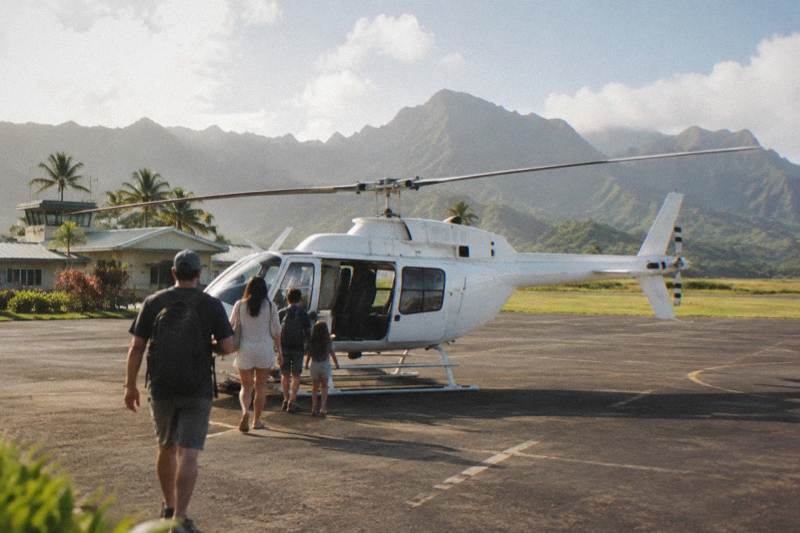
The practical reading of the roster favors a doors-on shared flight for anyone with a reason to prefer the calmest, most conventional cabin: a closed aircraft, a normal seat and harness, no wind buffeting and no minimum age above infancy. The Air Kauai Ohana doors-on flight, the Safari 55-minute flight and the Blue Hawaiian 50-minute eco flight are the three listings that fit that description, and they are the trio compared below. One guest review of the Ohana flight captures the tone of a doors-on ride: "Awesome experience! Our pilot, Steve, was extremely experienced and I felt very safe. He has been flying in Kauai for over 30 years and knows the area well and gave a very entertaining experience full of history."
What Do Kauai Operators Actually Say About Pregnancy?
Nothing definitive, and that absence is the answer: this site's verified files cover the FAQ and policy pages of Safari Helicopters, Blue Hawaiian, Air Kauai, Jack Harter, Island Helicopters and Mauna Loa, and none prints a pregnancy policy in the extracted text. Mauna Loa shows only a pregnancy-related FAQ topic heading with no captured wording, so no claim that Kauai operators welcome or refuse pregnant passengers can honestly be made.
That gap is not unusual in the tour industry, but it does shift the work to you. The workable approach is to contact the operator directly before booking, state how far along you are, and ask two things: whether their insurance or operations manual says anything about pregnancy, and whether any part of their flight profile, such as a doors-off harness or a high-altitude segment, would change the answer. Then put the same question to your prenatal care provider, who knows your history and nobody on this site does.
The listings themselves are built around physical facts rather than medical ones: weight and balance, harness fit and minimum ages. Safari's FAQ states that passengers of 250 lb or more may need an extra comfort seat, that two passengers combined over 420 lb likewise, and that everyone is weighed at check-in, per the operator's own FAQ page. Blue Hawaiian's FAQ covers front-row combined weight limits and weather cancellations with a 100 percent refund or reschedule, per its own FAQ. These are the policies that actually exist in writing, and they are the ones a pregnant traveler should read alongside her doctor's advice.
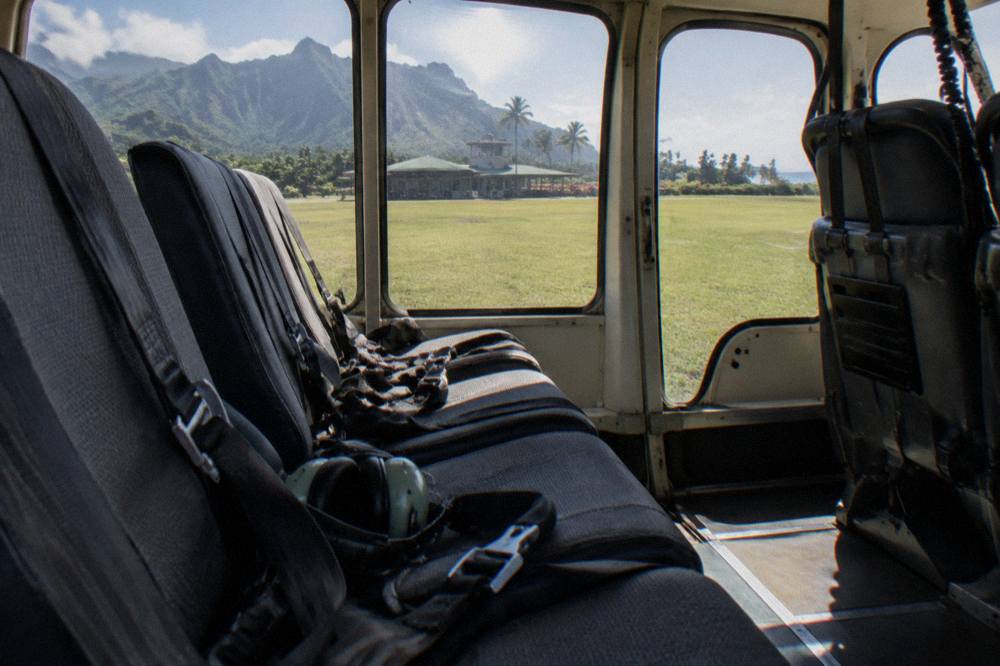
It is also worth being direct about what a flight involves physically. A doors-on tour is a seated ride with seat belts, narration and large windows; a doors-off tour means wind, a five-point harness anchored to the airframe, goggles and a lanyarded phone as the only loose item allowed. Neither is described here as safe or unsafe for pregnancy, because no source in the files says so. The distinction is simply that one format asks more of your body than the other.
If the doors-on format is the one that fits, the Ohana flight is worth a look alongside the others in the trio above: 45 minutes from the Lihue Airport heliport over Waimea Canyon, the Na Pali Coast and Manawaiopuna Falls, from $349 per person, with infants under 24 months riding on a lap, which tells you the cabin is treated as a family-friendly, low-friction environment. Free cancellation runs up to 24 hours before the start time, for a full refund, as it does across every listing on this roster.
Which Flight Format Suits A Pregnant Traveler Best?
On physical demands alone, the doors-on shared flight is the gentlest fit: a closed cabin, a standard seat and belt, no wind, no goggles, no five-point harness. Doors-off listings ask more of the body and private listings ask the most money, but no operator states that any format is suitable or unsuitable for pregnancy, so match each format's physical demands to what your doctor says.
The doors-on shared flights on this roster are the Air Kauai Ohana flight at 45 minutes from $349, the Safari 55-minute flight from $336 with all fees and taxes included on the listing, and the Blue Hawaiian 50-minute eco flight from $489, which carries 4.8 from 2,065 reviews, the largest review pool on the roster. All three fly comparable island loops, Na Pali, Waimea Canyon, Hanalei Bay and Waialeale weather permitting, in cabins of up to six. The Blue Hawaiian flight is the most-reviewed tour on the roster, and one guest review calls it a "must do experience, such a diverse island that can really only be appreciated by air." For a fuller picture of what these tour lengths typically run, our guide to Kauai helicopter ride prices compares the closest flight durations and the extras that shift the final cost.
The doors-off listings are a different physical proposition. The Air Kauai doors-off adventure supplies goggles, allows only a lanyarded phone on board, requires passengers to be at least 10, and 16 for an outside or edge seat. The Jack Harter MD500 doors-off flight runs 60 minutes in a cabin of at most four, with the pilot narrating canyons, falls and coast; a guest review describes it plainly: "Arthur was our pilot and he narrated the whole ride very well. We went in and out of canyons, gorges, seashores and mountains. What a breath taking view!" That is a magnificent hour of flying, and it is also an hour of open air, wind and a harness, which is exactly the trade-off to weigh.
The private doors-off flights, Ali'i Kauai's Ultimate Waterfalls flight from $425 per person with a minimum of two paying passengers, and Mauna Loa's all-window-seats flight from $384, add privacy and a guarantee that nobody sits in the middle, but they keep the doors-off format. The Ali'i listing carries 5.0 from 1,794 reviews, and its summary language, no strangers in the cabin, is the listing's own. Privacy is a real comfort factor for a pregnant traveler, and it is fair to weigh it, but the open cabin is still an open cabin.
A note on the middle ground: the Safari canyon-rim landing flight, 90 minutes from $396, is doors-on but includes a walk-around on the rim of Olokele Canyon after the helicopter sets down. It is the only landing flight on this roster, and the listing is explicit that the landing is at the canyon rim, not at Jurassic Falls. A 90-minute doors-on flight with a short walk on uneven ground is a different physical ask from a 45-minute seated loop, and that is worth naming when you talk to your doctor.
Weight, Harness And Seat Policies That Matter
Yes, every passenger on every listing gets weighed at check-in, because operators must complete an FAA performance plan before each flight. Weight thresholds and extra-seat rules vary by operator, are printed on each listing, and have no universal number, so check your numbers against the exact flight before you reach the counter.
Weigh-in is standard and not negotiable: the FAA requires the performance plan, and the operators state the weigh-in on their own pages. For a pregnant traveler this matters in a practical way, because the number on the scale at check-in is the number the operator uses, and the extra-seat policies are triggered by it. None of this is a judgment about anybody; it is arithmetic that keeps a rotorcraft inside its hover limits.
| Listing | Weight and seat policy on the listing | Minimum age |
|---|---|---|
| Blue Hawaiian 50-Minute Flight | Extra adjacent seat required for each guest over 240 lbs | Not stated |
| Safari 55-Minute Flight | Additional seat required over 250 lbs, or a combined 420 lbs for two people | Not stated |
| Safari Canyon Rim Landing | Additional seat required over 250 lbs, or a combined 420 lbs for two people | Not stated |
| Air Kauai Ohana Doors-On | Extra seat required over 240 lbs, or a combined 420 lbs for two people | Infants under 24 months ride on a lap |
| Blue Hawaiian Princeville Flight | Adjacent empty seat required for each guest over 240 lbs | Not stated |
| Air Kauai Doors-Off Adventure | Extra seat required over 230 lbs, combined 400 lbs for two, or an average of 190 lbs for groups of three or more | 10, and 16 for an outside seat |
| Jack Harter MD500 Doors-Off | Comfort seat required over 250 lbs, or a combined 400 lbs for two people | 10 |
| Jack Harter Heart of the Island | Comfort seat required over 250 lbs, or a combined 400 lbs for two people | 10 |
| Ali'i Kauai Private Doors-Off | Maximum 275 lbs per passenger, weighed at check-in | 7, and at least 40 lbs |
| Mauna Loa Private Doors-Off | Maximum 275 lbs per person, 620 lbs total | 7, ages 7 to 11 sit next to a closed door |
Two readings of that table matter here. First, the doors-off listings carry the tightest and most conditional rules, including Air Kauai's group-average threshold, which is unusual and worth knowing about in advance rather than at the counter. Second, the private flights cap rather than surcharge: Ali'i and Mauna Loa print a hard maximum per passenger instead of a comfort-seat purchase. If an extra seat would be needed on a shared flight, that also changes the price, since the adjacent seat is a second ticket.
Seat assignment on shared flights is determined by weight and balance, not by preference, and the listings say so. If a specific seat matters to you, for comfort, for nausea or for proximity to the front, the honest move is to raise it with the operator at booking and accept that the final call happens at weigh-in. The site's seat-assignment guide covers how this works in practice: see how Kauai helicopter seats get assigned.
What About Turbulence, Motion Sickness And Comfort?
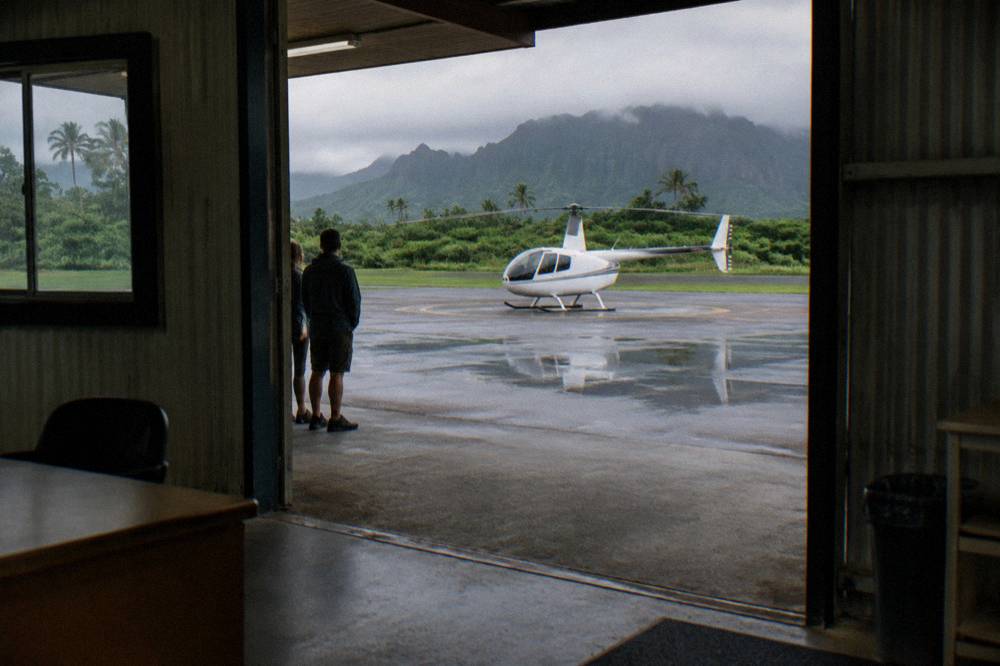
Weather is the big variable: Kauai flight operators themselves say trade winds and cloud cover over Na Pali and the island's interior frequently cause cancellations or route restrictions, especially after late morning. There is no verified statistic on turbulence or motion sickness rates for pregnant passengers, but mornings tend to be calmer, weather cancellations are rescheduled or refunded, and timing, clothing and flight format are the comfort choices you actually control.
The operators are candid that the time of day makes a difference to conditions. Blue Hawaiian's FAQ and Safari's FAQ both address timing, and a local recovery report from after Hurricane Lowell suggested morning slots for the calmest air. The general pattern reported across the sources is that winds build through the day over the interior ridges, so a morning departure is the conventional choice for anyone sensitive to motion. That is a comfort recommendation about weather, not a medical claim about pregnancy.
On motion sickness: no number exists in the files for how often passengers feel unwell, and no operator prints a sickness policy. The practical facts are these. A doors-on cabin is enclosed and quieter; a doors-off cabin is loud and windy, which is why goggles are supplied and loose items are banned on the Air Kauai doors-off listing. If nausea is part of your pregnancy, that contrast is the single most relevant physical difference between the two formats, and it is worth saying out loud to both your doctor and the operator.
Clothing is the other controllable. A guest review of the Safari 55-minute flight passes along a genuinely useful tip: "There was some glare at times off our arms and legs - wearing darker clothing helps reduce this." Dark, non-reflective clothing reduces glare in photography, and layers help in an open cabin. The site's clothing guide goes deeper: see what to wear on a Kauai helicopter tour.
One more honest note on the current moment. After Hurricane Lowell, the DLNR notice closed all DLNR lands on Kauai, including Kokee State Park and the roads into Waimea Canyon, and reports said Lihue helicopter tours were flying with fewer slots than usual. Flights still see the canyon and the coast from the air, and ground access follows DLNR notices at the department's site. No flight is promised here; read the live listing for current departures.
Cancellation Rules If You Need To Back Out
Every listing on this roster states free cancellation up to 24 hours before the start time, with a full refund, and all six operators state that weather cancellations are rescheduled or refunded. Backing out is therefore simple: cancel at least a day ahead and you get your money back. Inside 24 hours, or for medical reasons, no refund is promised, so ask the operator directly.
The 24-hour rule matters for a pregnant traveler in a specific way: it converts the booking from a commitment into an option. You can book the doors-on Ohana flight, the Safari flight or the Blue Hawaiian flight well ahead, when morning slots are available, and make the final go or no-go call the day before, when you know how you actually feel. The private listings carry the same cancellation line, so the same logic holds at the higher price points.
What the policy does not cover is equally worth stating. A last-minute medical issue inside the 24-hour window is not addressed in the printed policy, and no operator page in the files describes a medical exception. If your pregnancy has any chance of producing a same-day change of plans, the honest move is to ask the operator, in writing before booking, how they handle a documented medical cancellation inside the window. Some operators will work with you; none of them promise it in the text this site has verified, so do not assume it.
The weather side is cleaner. If the operator cancels for weather or maintenance, the listings state a reschedule or a full refund, and Blue Hawaiian's FAQ states a 100 percent refund or reschedule in its own words. Kauai's weather is the reason: Waialeale averages some 450 inches of rain a year at its summit, and the crater is flown weather permitting. A weather scrub is the operator's call, not a mark against your planning.
Questions To Ask Before You Book
Five questions cover the ground: the operator's pregnancy stance, the harness and seat fit, the weight policy as it applies to you, the cancellation path inside 24 hours, and the format itself. None of these has a universal answer on Kauai, because no operator prints a pregnancy policy and every weight, age and seat rule is per-listing. Ask them by email before you pay, keep the replies, and take the same questions to your prenatal provider.
First, ask the operator directly whether their operations manual or insurer says anything about pregnancy. The finding of this article is that nothing is printed, so the answer will come from a human, and email gives you a record. Second, ask about the harness: a doors-on seat belt and a doors-off five-point harness sit differently across a changing body, and the operator can tell you exactly what is fitted in the aircraft you would fly.
Third, check the weight policy against your own numbers, including the check-in weigh-in, since the operator will weigh you regardless. Fourth, ask what happens if you cancel inside 24 hours for a documented medical reason; the printed policy stops at the 24-hour line. Fifth, ask whether the doors-on cabin is available on your date, because if the answer to the format question is doors-on, the Ohana, Safari and Blue Hawaiian listings are the ones to compare, and morning slots go first.
A sensible companion read for anyone planning around a family situation is the site's guide to Kauai helicopter tours with kids, which works through the age, lap-child and harness rules on the same listings from the other direction. And for the broader question of whether the flight is worth the money at all, the site's longread on whether Kauai helicopter tours are worth it covers the value case. This site, Helicopter Tours Kauai, publishes the comparison so you can make the call with the listings in front of you.

The doors-on trio remains the natural shortlist for this question, and the comparison is honest: the Ohana flight at 45 minutes from $349 with a lap-infant policy, the Safari flight at 55 minutes from $336 with fees and taxes included, and the Blue Hawaiian flight at 50 minutes from $489 with the roster's largest review pool at 4.8 from 2,065 reviews. Whichever you lean toward, the booking page is where the current slots, the current price for your date and the operator's own answers live.
Common Questions About Helicopter Tours And Pregnancy
Can You Do A Helicopter Tour While Pregnant?
No Kauai operator page in this site's research files states a pregnancy policy, so there is no printed yes or no. The decision belongs to your prenatal care provider and the operator. What the listings do print is format, weight policy, minimum age and free cancellation up to 24 hours before the start time, and those are the facts to bring to both conversations.
Do Kauai operators refuse pregnant passengers?
No refusal policy appears in any operator text this site has verified. Mauna Loa Helicopters lists a pregnancy-related FAQ topic, but no wording was captured, and no other operator addresses it. Contact the operator directly before booking and ask, then confirm with your doctor.
Is a doors-on flight better than doors-off while pregnant?
No source certifies either format for pregnancy. The physical difference is plain: doors-on means an enclosed cabin, a standard seat and belt and no wind, while doors-off means a five-point harness, goggles, wind and a lanyarded phone as the only loose item. Match that difference to your doctor's advice rather than to any claim on this site.
Will I be weighed at check-in?
Yes. Every listing on the roster weighs passengers at check-in, because the operators must complete an FAA performance plan covering weight, center of gravity and hover limits before each flight. The extra-seat thresholds differ by operator and are printed on each listing.
Can I cancel if I feel unwell the day before?
Every listing on the roster states free cancellation up to 24 hours before the start time, for a full refund. Inside that window, the printed policy does not describe a medical exception, so ask the operator in writing before you book if a same-day change is possible for you.
What if the weather cancels my flight?
The operators state that weather cancellations are rescheduled or refunded; Blue Hawaiian's FAQ says 100 percent refund or reschedule in its own words. Kauai flights are weather-dependent, the Waialeale crater is flown weather permitting, and no flight is ever guaranteed to run.