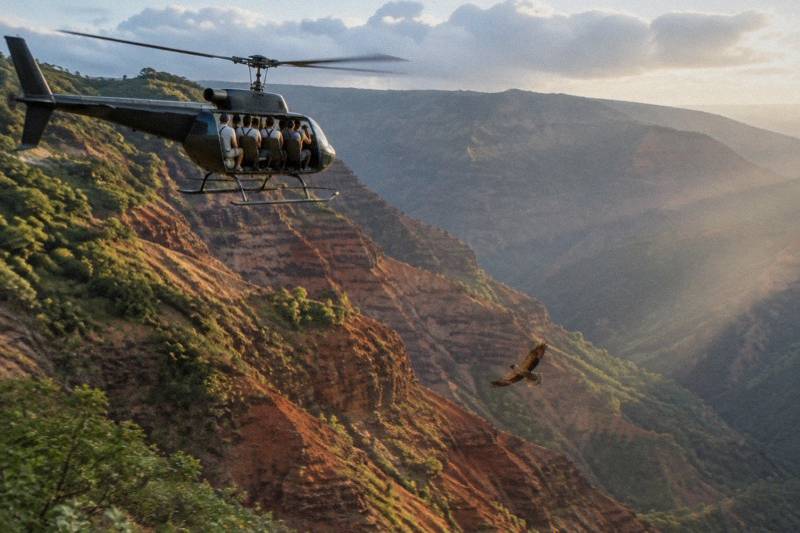
Kauai Helicopter Seat Assignment: Window Seats And Middle Seats
On almost every shared Kauai helicopter tour, the pilot and the scale decide where you sit, not your booking preference. Here is how weight and balance shapes your seat, what the middle seat is actually like, and how to tilt the odds toward a window.
Short answer
Seat assignment on Kauai helicopter tours is set by weight and balance, not preference: operators weigh every passenger at check-in and seat them so the aircraft stays within its center-of-gravity limits. Shared cabins of up to six usually seat two in front and four in the rear, so middle seats exist. Private flights, including the all-window-seat doors-off flight from $384 per person, remove the middle-seat problem entirely.
Every passenger on a shared Kauai helicopter tour is weighed at check-in, and that number, not a seat map or an early booking, decides where they sit. Operators state this plainly: the FAA requires a performance plan covering weight, center of gravity and hover limits before each flight, and the only way an operator can honor that rule is to place bodies where the math says they belong. For travelers used to picking a window seat at booking, that takes some adjustment. This guide walks through how seat assignment actually works on the island's flights, what the middle seat feels like in a cabin of six, which weight thresholds trigger a required extra seat, and when a private flight with all window seats is the cleaner answer. The details come from the operators' own listing pages and FAQ sections, plus the federal rule that sits behind all of it.
How Are Seats Assigned On A Kauai Helicopter Tour?
Seats on a Kauai helicopter tour are assigned by the operator at check-in, using each passenger's weighed weight to keep the aircraft inside its center-of-gravity envelope. No listing on this roster lets you pick a specific seat at booking, and none promises a window seat. The pilot or ground crew makes the final call, and the federal performance-plan rule is the reason.
The governing rule is 14 CFR 136.75, the Hawaii-specific air tour regulation. Section 136.75(b) requires that a performance plan covering weight, center of gravity and hover limits be completed before each flight in a rotorcraft, and operators meet it by weighing passengers and distributing them accordingly. The operators' own pages say the same thing in plainer words: Safari's FAQ states passengers are weighed at check-in, and the shared listings note that seat assignment is determined by weight and balance restrictions. You can read the regulation itself at the eCFR page for 14 CFR 136.75.
What this means in practice: a family of four may be split front and rear, a solo traveler may be placed in the back row to balance a heavy couple up front, and the front-seat passenger next to the pilot is often the person whose weight the load sheet needs there. It is not favoritism and it is not negotiable. A helicopter that is loaded outside its envelope can lose hover margin, and no operator on this island will trade that for a seating preference.
The practical takeaway for planning: book the flight that fits your group, arrive at check-in expecting the scale, and treat the seat you are given as part of the safety system rather than a service failure. If a window seat matters enough that a middle seat would spoil the flight, the sections below cover the options that remove the gamble, including the private doors-off flight where every seat is a window seat.
Can You Choose A Window Seat On A Shared Kauai Flight?
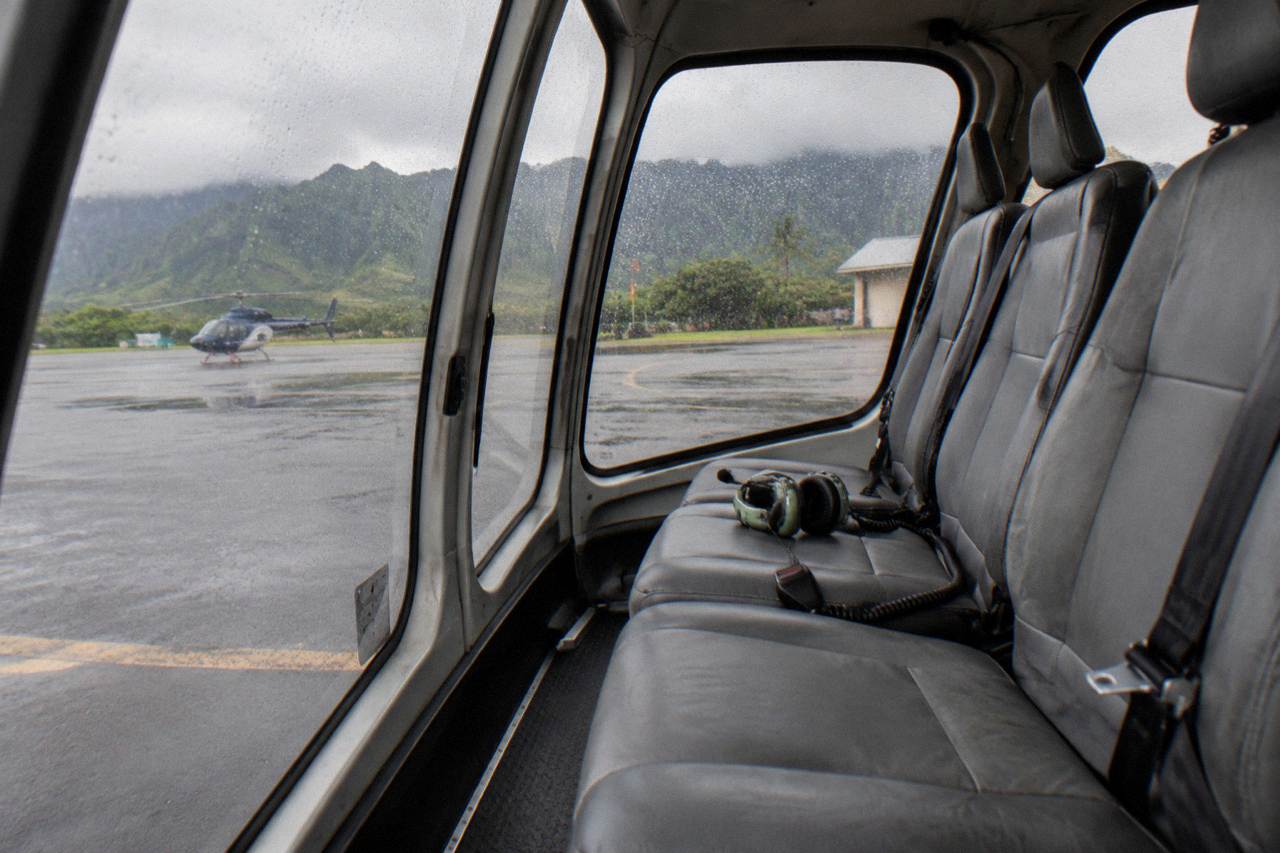
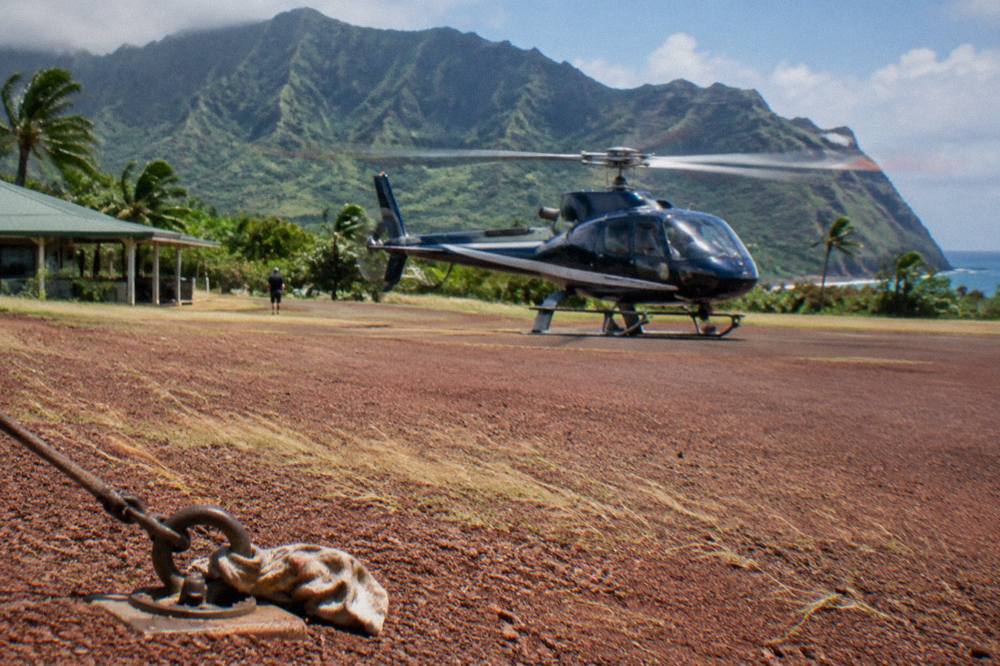
On a shared flight you can request a window seat, but no operator on this roster guarantees one. Cabins of up to six passengers usually seat two in front and four in the rear, which means two of the rear passengers sit at the windows and two sit in middle positions. Weight and balance decides who goes where, and heavier passengers are often placed where the load sheet needs them.
The geometry is the core problem. A typical shared tour helicopter on Kauai carries up to six passengers: two seats in front beside the pilot, and a rear bench of four. That rear bench has exactly two window positions and two middle positions. A review of the Safari 55-minute flight describes the layout from a passenger's point of view: "Helicopter sat 2 in front and 4 in the rear." The same review, from Allison D., notes a photography wrinkle worth knowing before you fly: "There was some glare at times off our arms and legs - wearing darker clothing helps reduce this."
If you are in a pair, your odds are decent but not certain. If you are a solo traveler in a full cabin of six, a middle seat is a realistic outcome on any shared flight. Booking early does not change this, because the seat plan is not drawn until check-in, when the operator knows every passenger's weight. Some travelers ask at the counter, and crews will often accommodate a polite request when the numbers allow it, but the listing language is consistent across the roster: seat assignment follows weight and balance, full stop.
There is one structural way to raise your window odds on a shared flight: fly in a smaller aircraft. The doors-off MD500 flights carry at most four passengers, which shrinks the cabin and, in a doors-off configuration, gives every passenger open air rather than a window to look through. One review of the 60-minute MD500 flight from Samina T. describes the payoff: "We went in and out of canyons, gorges, seashores and mountains. What a breath taking view!" For travelers who want the full-island route in a conventional cabin, the most-reviewed flight on this roster is the Blue Hawaiian 50-minute eco flight, 4.8 from 2,065 reviews, from $489 per person, and it is subject to the same six-passenger seating math as every other shared cabin.
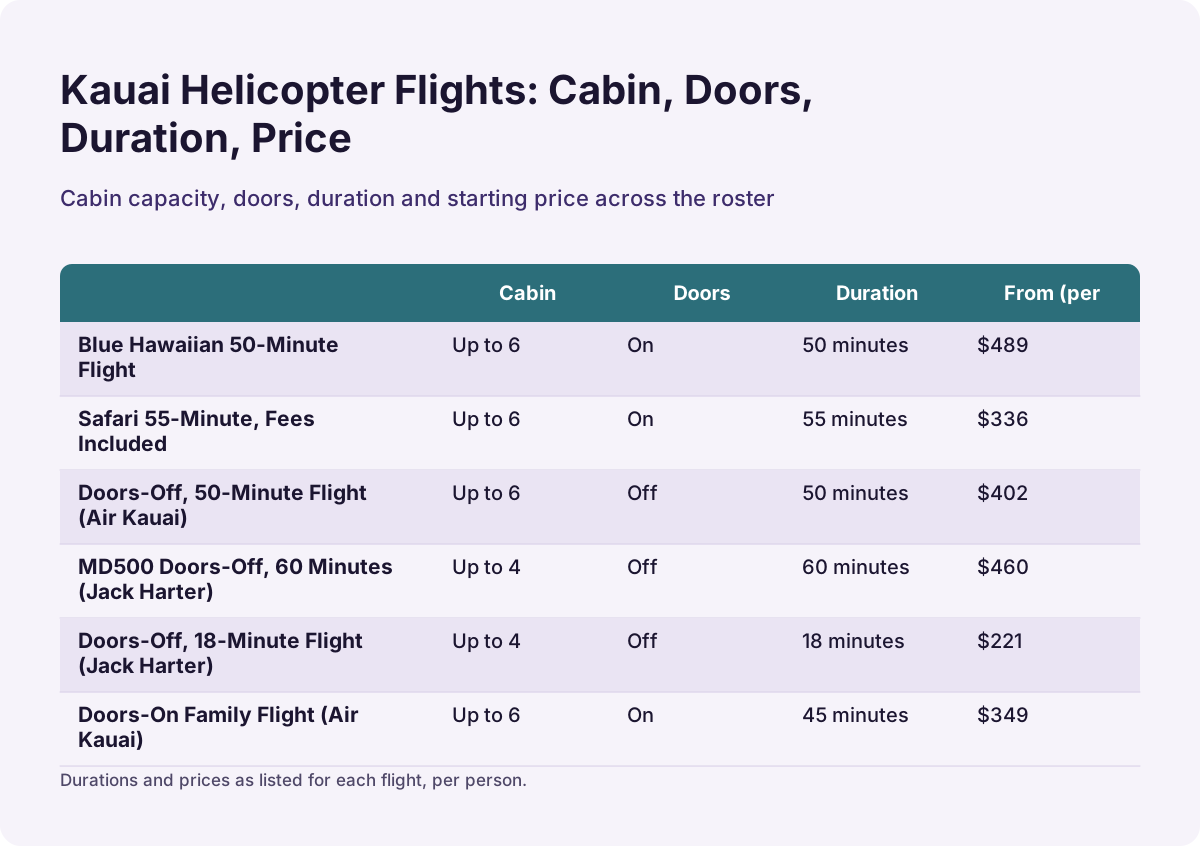
For readers deciding between formats, the comparison below shows how cabin size, doors and price interact on this roster's shared flights.
| Flight | Cabin | Doors | Duration | From (per person) | Rating |
|---|---|---|---|---|---|
| Blue Hawaiian 50-Minute Flight | Up to 6 | On | 50 minutes | $489 | 4.8 from 2,065 reviews |
| Safari 55-Minute, Fees Included | Up to 6 | On | 55 minutes | $336 | 4.8 from 963 reviews |
| Doors-Off, 50-Minute Flight (Air Kauai) | Up to 6 | Off | 50 minutes | $402 | 4.8 from 545 reviews |
| MD500 Doors-Off, 60 Minutes (Jack Harter) | Up to 4 | Off | 60 minutes | $460 | 4.8 from 425 reviews |
| Doors-Off, 18-Minute Flight (Jack Harter) | Up to 4 | Off | 18 minutes | $221 | 4.8 from 16 reviews |
What Is The Middle Seat Like On A Doors-On Flight?
The middle seat on a doors-on Kauai flight is a real rear-bench position between two window passengers, with visibility that is decent but framed by your neighbors and the window posts. You still see the canyon and the coast, but you lean and look rather than gaze freely. Reviews from shared cabins confirm the flights remain spectacular from any seat, and no listing promises a middle-seat passenger a window view.
Start with the honest part: nobody books a helicopter tour hoping for the middle seat, and on a six-passenger cabin two people per flight get it. But the middle seat on these aircraft is not the middle seat of an airliner. The windows are large, the aircraft banks toward the scenery, and the pilot narrates toward both sides of the cabin. A review of the Air Kauai doors-on family flight, from Heather R., captures how much of the experience rides on the pilot rather than the seat: "Our pilot, Steve, was extremely experienced and I felt very safe. He has been flying in Kauai for over 30 years and knows the area well and gave a very entertaining experience full of history."
The doors-on family flight itself is a solid choice for groups with mixed priorities: 45 minutes over Waimea Canyon, the Na Pali Coast and Manawaiopuna Falls, from $349 per person, 4.8 from 212 reviews, with infants under 24 months riding on a lap per the listing. Because the cabin holds up to six, a family of five will almost certainly include at least one middle-position passenger, and the weight plan may place the adults apart. Couples and solo travelers who dread that outcome have two honest paths: fly a four-passenger aircraft, or fly private.
Why Does Your Weight Decide Your Seat On A Kauai Helicopter?
Every passenger is weighed at check-in because the FAA performance-plan rule requires the operator to know the exact load before flight, and the seat map is drawn from those numbers. Each operator prints its own thresholds: an extra comfort or adjacent seat is required above a certain individual weight or a combined pair weight, and those figures differ by operator and aircraft. There is no island-wide weight limit, only per-listing policies.
The thresholds matter for seating in two ways. First, a passenger who triggers the extra-seat policy is seated to occupy two positions, which changes the geometry for everyone else in the cabin. Second, heavier passengers are often placed in specific rows to keep the center of gravity in range, which is why a request made at the counter can be refused without any bad faith involved. Safari's FAQ states that passengers of 250 lb or more may need an Extra Comfort Seat, with a combined 420 lb or over for two people, and that everyone is weighed at check-in; you can read it on Safari's own FAQ page.
The roster's per-listing policies are printed below. Read your own listing's policy before booking, because the numbers vary more than most travelers expect, and the extra seat is a real additional cost, not a courtesy.
| Flight | Weight And Seat Policy On The Listing |
|---|---|
| Blue Hawaiian 50-Minute Flight | Extra adjacent seat required for each guest over 240 lbs (108 kg) |
| Safari 55-Minute, Fees Included | Additional seat required over 250 lbs, or a combined 420 lbs for two people |
| Canyon Rim Landing, 90 Minutes (Safari) | Additional seat required over 250 lbs, or a combined 420 lbs for two people |
| Doors-On Family Flight (Air Kauai) | Extra seat required over 240 lbs, or a combined 420 lbs for two people |
| Doors-Off, 50-Minute Flight (Air Kauai) | Extra seat required over 230 lbs, a combined 400 lbs for two, or an average of 190 lbs for groups of three or more |
| MD500 Doors-Off, 60 Minutes (Jack Harter) | Comfort seat required over 250 lbs, or a combined 400 lbs for two people |
| Private Doors-Off Flight (Ali'i Kauai) | Maximum 275 lbs per passenger, weighed at check-in |
| Private Doors-Off, All Window Seats (Mauna Loa) | Maximum 275 lbs per person, 620 lbs total |
Notice the pattern: doors-off flights tend to run tighter limits than doors-on flights, because the smaller aircraft and open cabin leave less margin. The Air Kauai doors-off listing is the strictest on the roster for groups, averaging the whole party at 190 lbs or more into extra-seat territory. None of this is a judgment about any passenger; it is the same arithmetic the pilot runs before every flight, and the operators publish it so there are no surprises at the scale.
Do Doors-Off Flights Solve The Seat Problem?
Doors-off flights largely dissolve the window-seat question, because with the door off there is no window between you and the view. The Air Kauai doors-off flight carries up to six with goggles supplied and only a lanyarded phone allowed on board, minimum age 10 and 16 for an outside seat, while the Jack Harter MD500 flights carry at most four, so every passenger is close to an open edge.
The trade is intimacy for exposure. On the 50-minute Air Kauai doors-off flight, from $402 per person and 4.8 from 545 reviews, the listing states that passengers in outside or edge seats must be at least 16, while the cabin's minimum age is 10. That is the one roster policy that explicitly ranks seats: the edge positions, the ones with the unobstructed air, are reserved for older passengers. A review from Cindy T. suggests the format lands regardless of position: "This was our favorite thing we did in Hawaii! It was stunningly beautiful - worth every penny!! And our pilot was excellent!" Everything else covered here is indexed on Helicopter Tours Kauai.
The MD500 option is the stronger seat play. With at most four passengers, nobody is far from an opening, and the pilot narrates the island's canyons, falls and coast from a small, agile machine. A review from Nikita P. describes exactly that geometry: "There was also only 4 people apart form the pilot so everyone got great views." The 60-minute version runs from $460 per person at 4.8 from 425 reviews; the 18-minute Heart of the Island flight, from $221 per person, is the short, cheaper doors-off option into Waialeale, though it carries only 16 reviews at 4.8, too small a pool to treat as a verdict.
One practical note for photographers: doors-off listings restrict what you bring, typically to a lanyarded phone, so the seat question matters less than the gear question. If you are carrying a real camera, a doors-on window seat may actually serve you better than a doors-off edge, and the Kauai helicopter photography guide covers that trade in detail.

Can A Private Flight Guarantee Everyone A Window Seat?
Yes, and it is the only format on this roster that does. The Mauna Loa private doors-off flight seats your group only, with every passenger on a window seat, for about 55 minutes from $384 per person at 4.8 from 522 reviews. The Ali'i Kauai private doors-off flight, from $425 per person at 5.0 from 1,794 reviews, likewise flies your group with no strangers in the cabin, per its listing.
The private format changes the seating conversation completely. There is no load sheet balancing strangers, no middle position between unknown passengers, and no negotiation at the counter. The listing for the Mauna Loa flight states that every passenger gets a window seat and that life preservers are supplied; the doors come off, the group flies alone, and the route passes Manawaiopuna Falls, Waimea Canyon, Na Pali and Waialeale. Its weight policy is a stated maximum of 275 lbs per person and 620 lbs total, with a minimum age of 7, and children aged 7 to 11 sit next to a closed door. A review from Ann J. gives the flavor: "This was an awesome experience. Totally worth it and checked another bucket list item. Thanks so much for a great time. You made our 40th anniversary trip sooo memorable."
The Ali'i Kauai alternative is the most-reviewed private option on the roster, 1,794 reviews at 5.0, from $425 per person for a 75-minute flight with a minimum of two paying passengers, maximum 275 lbs per passenger weighed at check-in, minimum age 7 and at least 40 lbs. Its listing summarizes the appeal plainly: no strangers in the cabin and nobody stuck in the middle seat. A review from Kelsey D. matches: "Once in a lifetime experience! Breathtaking views. Will was an amazing tour guide and helped calm my father's nerves before taking off."
The two private listings compared side by side make the differences easy to see: cabin rules, ages, durations and prices all differ, and both eliminate the middle seat.
| Private Doors-Off, All Window Seats (Mauna Loa) | Private Doors-Off Flight (Ali'i Kauai) | |
|---|---|---|
| Duration | 55 minutes | 1 hour 15 minutes |
| From (per person) | $384 | $425 |
| Rating | 4.8 from 522 reviews | 5.0 from 1,794 reviews |
| Cabin | Your group only | Your group only, minimum 2 paying passengers |
| Weight policy | Maximum 275 lbs per person, 620 lbs total | Maximum 275 lbs per passenger, weighed at check-in |
| Minimum age | 7 (ages 7 to 11 sit next to a closed door) | 7 (and at least 40 lbs) |
| Departure | Mauna Loa Helicopters heliport, Ahukini Rd, Lihue | Lihue Airport Commuter Terminal |
Private pricing reads higher per person than the cheapest shared seats, but for groups of three or four the arithmetic narrows, and the guarantee is the point: on the all-window-seat private flight, the middle seat does not exist. The private helicopter tour guide compares both private listings in full.
How Do You Get A Better Seat On Any Kauai Flight?
You cannot pick a seat at booking on any listing here, but you can improve the odds: fly in a smaller aircraft, book the front row only if the weight plan allows it, ask politely at check-in, travel light, and be honest at the scale. The single most reliable move is choosing a four-passenger or private cabin, which removes the middle position structurally rather than hoping the load sheet cooperates.
A few field-tested habits help. Arrive early, because check-in is when the seat plan is drawn and the crew has the most flexibility before the numbers firm up. State a preference calmly and accept the answer; crews reseat for safety, not spite. Wear dark clothing, which the Allison D. review above suggests reduces glare in photographs from inside the cabin. And read your listing's weight policy before you fly rather than at the counter, so an extra-seat requirement never arrives as a surprise charge. The weight limits guide walks through every operator's policy on this roster.
Timing plays a smaller role than seating folklore suggests. Operators including Blue Hawaiian state in their FAQ that time of day makes little difference to flight conditions, though a local guide after the September 2026 storm reported morning slots running with calmer winds, and reports said Lihue flights were flying with fewer slots than usual during recovery. The practical version: take the morning slot if it suits your schedule, but book the cabin that suits your group, because the cabin, not the clock, decides your seat. Ground access to the canyon and coast parks follows DLNR notices, so flights remain the reliable way to see the interior while closures sort out, and the best time of day guide covers the scheduling question in depth.
For families, one more consideration: the doors-on family flight allows infants under 24 months on a lap, while the doors-off listings set minimum ages of 10, and the private flights allow children from age 7. The tours with kids guide maps those policies by listing.
Which Kauai Flight Should You Book For The Seat You Want?
Book by seat priority: choose the shared Safari 55-minute doors-on flight from $336 per person, all fees and taxes included, for views without seat guarantees; pick the four-passenger doors-off MD500 so everyone sits near an open edge; or reserve a private all-window flight, such as Mauna Loa from $384 or Ali'i Kauai from $425 per person, which eliminates the middle seat entirely.
The decision collapses to one question: how much does a guaranteed window cost to you? On shared cabins it costs nothing extra but cannot be promised. On the four-passenger MD500 it costs the doors-off premium and buys proximity to open air for everyone. On the private flights it costs the per-person charter rate and buys certainty, which is why this site's overall comparison of Kauai helicopter tours treats cabin format, not price alone, as the first filter.
Whatever you choose, the same rules apply across the roster: no listing includes hotel pickup, every flight meets at its own heliport or office around Lihue (the Discover flight departs Princeville), every passenger is weighed, and every listing carries free cancellation up to 24 hours before the start time, with weather cancellations rescheduled or refunded per the operators. Read the live listing for the date you want, because prices vary by date and group, and the seat you get will be the seat the load sheet gives you. The scale, the route and the weather all have a vote; your booking only sets the cabin.
Common Questions About Kauai Helicopter Seat Assignment
Can I pick my seat on a Kauai helicopter tour?
No listing on this roster lets you choose a specific seat at booking. Seats are assigned at check-in based on each passenger's weighed weight, because the FAA requires a performance plan covering weight and center of gravity before every flight. You can state a preference at the counter, and crews will often honor it when the numbers allow, but no operator promises a particular seat.
Do Kauai helicopters have middle seats?
Shared cabins of up to six passengers typically seat two in front and four on a rear bench, so two rear passengers per flight sit in middle positions. Four-passenger aircraft and private flights have no true middle seat. The private doors-off all-window-seat flight seats every passenger at a window by design.
Why do operators weigh passengers at check-in?
The FAA's Hawaii air tour rule, 14 CFR 136.75, requires a performance plan with weight, center of gravity and hover limits before each rotorcraft flight. Weighing passengers is how operators build that plan, and the same numbers determine seat placement. Every operator on this roster weighs passengers at check-in.
Will I have to buy an extra seat because of my weight?
It depends on your listing's policy, and the thresholds differ by operator. Shared doors-on listings generally require an extra seat above 240 to 250 lbs individually or 420 lbs combined for two; the Air Kauai doors-off listing averages groups of three or more at 190 lbs. Private flights state maximums of 275 lbs per passenger. Read your own listing before booking.
Is the front seat next to the pilot the best seat?
The front offers the widest view and is often coveted, but it is assigned by weight and balance like every other seat, and heavier passengers are frequently placed there to balance the aircraft. You cannot book it, and Blue Hawaiian's FAQ notes front-row combined weight limits on its aircraft. Treat it as a possibility, not a plan.
Does booking early get me a better seat?
Booking early secures your spot on the flight, not a position in the cabin, because the seat plan is drawn at check-in once every passenger's weight is known. What actually improves your odds is the aircraft: a four-passenger doors-off MD500 or a private flight removes the middle position entirely.