When Not To Visit Kauai?
An honest look at the worst windows for a Kauai trip: the wettest months from official Lihue rainfall normals, winter North Shore swell, and what hurricane season actually means for flights and park access.
When Not To Visit Kauai?
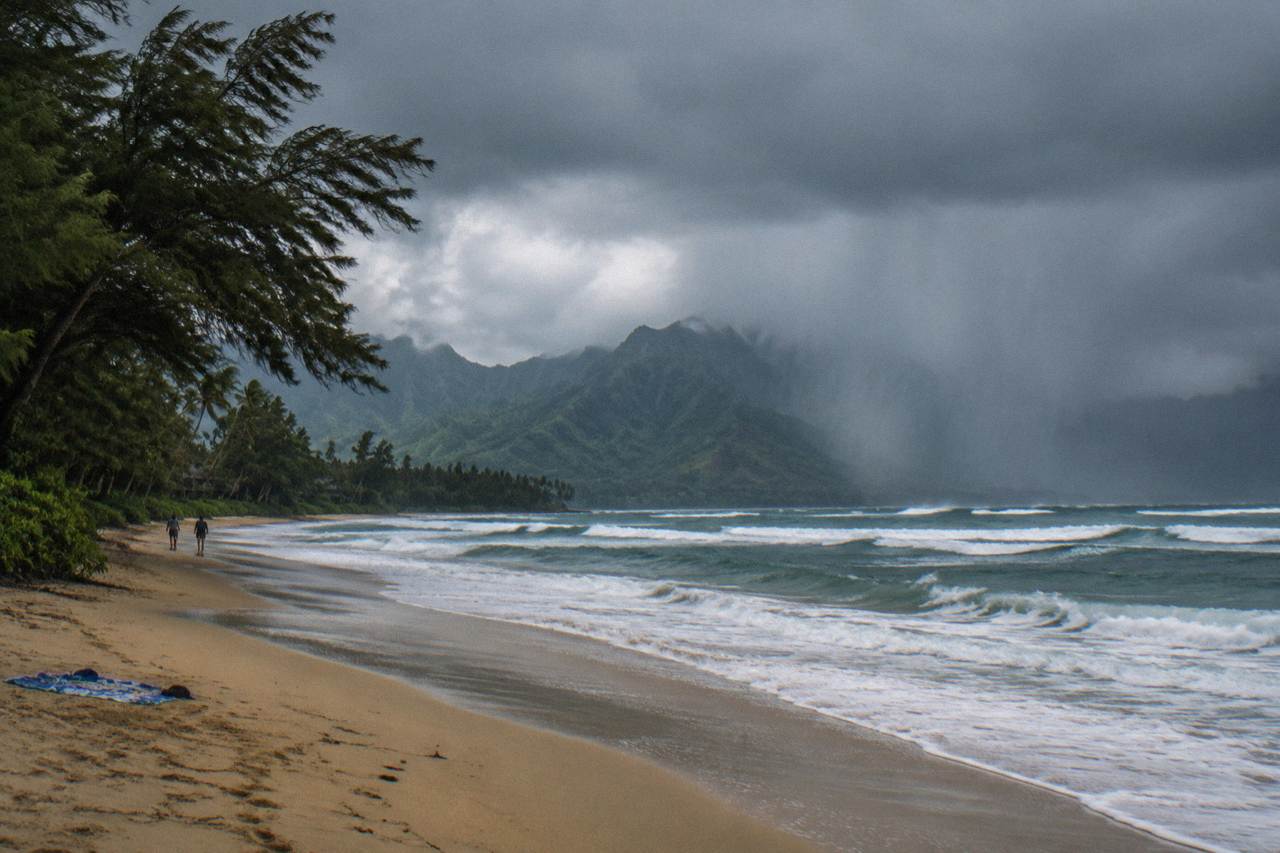
The hardest windows to plan around are March and the December-to-January stretch, the two wettest periods in the official Lihue rainfall normals, plus the October-to-April surf season that closes some North Shore water access. Hurricane season, June through November, adds a different risk: September 2026's Hurricane Lowell closed all DLNR lands on Kauai, and access follows DLNR notices. None of these make a trip impossible, but each one narrows what you can actually do. If you're weighing which coast to book, the comparison of Kauai's shores shows how the north, south, and east sides differ in rain, surf, and helicopter access.
Every island has months it would rather not talk about, and Kauai is unusually honest about its weather because the numbers are public. The National Weather Service's 1991-2020 climate normals for Lihue record 36.22 inches of rain across an average year, but that total is not spread evenly. March alone averages 5.61 inches, and December follows at 4.64, while June and July sit near the bottom of the scale at 1.79 and 1.75 inches. Those are airport-basin figures, and the island's interior is dramatically wetter: the Waialeale summit, 5,148 feet up, averages around 450 inches of rain a year, which is why the mountain's crater is one of the wettest spots on Earth and why flights over it depend so heavily on cloud cover.
The other honest answer is that "worst" depends on what you came for. A couple whose whole plan is Na Pali Coast views from a helicopter has a different bad month than a family hoping for calm swimming beaches. A wet morning can still end with a cleared coastline, and a dry forecast can still end with a grounded flight if the wind comes up over the interior. This article walks through each weak window with the figures that are actually verified, then looks at what a trip can still look like inside those windows, including flights such as the 50-minute shared eco flight from Lihue that covers the whole island in one loop. Plenty of riders on that island loop are also chasing movie scenery, so if that's part of your plan, our guide to whether the Jurassic Park gate still stands on Kauai sorts the filming rumors from what is actually confirmed at Manawaiopuna Falls.
If the trio above looks like an odd fit for a "when not to go" article, it is deliberate. Shared doors-on flights are the most weather-tolerant way to see the island, and all three listings state free cancellation up to 24 hours before the start time, with weather cancellations rescheduled or refunded per the operators. That matters most in the months this page is about.
Which Months Get The Most Rain On Kauai?
March is the wettest month in the Lihue normals at 5.61 inches, followed by December at 4.64 and November at 4.03; the driest are June and July at 1.79 and 1.75 inches. Those are averages, not forecasts, and they measure the Lihue lowland basin, not the wet interior. But a visitor deciding between March and June is choosing between roughly three times the average rainfall and the calmest stretch of the year.
The full monthly picture from the official normals looks like this, and it is worth reading as a pattern rather than a set of guarantees. The table below is the same data the National Weather Service publishes for the Lihue station.
| Month | Average rainfall (inches) | Average high (F) |
|---|---|---|
| January | 2.78 | 78.6 |
| February | 3.63 | 78.1 |
| March | 5.61 | 78.5 |
| April | 2.03 | 79.8 |
| May | 2.18 | 81.6 |
| June | 1.79 | 83.3 |
| July | 1.75 | 84.6 |
| August | 2.33 | 85.2 |
| September | 2.18 | 85.3 |
| October | 3.27 | 83.9 |
| November | 4.03 | 81.2 |
| December | 4.64 | 79.1 |
The source is the NOAA National Centers for Environmental Information, which publishes the 1991-2020 station normals for Lihue. Two things stand out. First, the shoulder dip is real: April and May drop sharply from March, which is why late spring is often suggested as a quieter, drier window. Second, the wet season is really a November-to-March arc with one spike in the middle, not a single bad month.
Rain on Kauai is also not evenly distributed across the island. Lihue, on the southeast coast, sits in a comparatively dry basin. The north shore and the mountain interior take far more, and the Waimea side is the driest of all. A March week can bring steady showers to Hanalei while the Poipu coast stays partly sunny, which is one reason many returning visitors already know to book flexible plans rather than fixed ones.
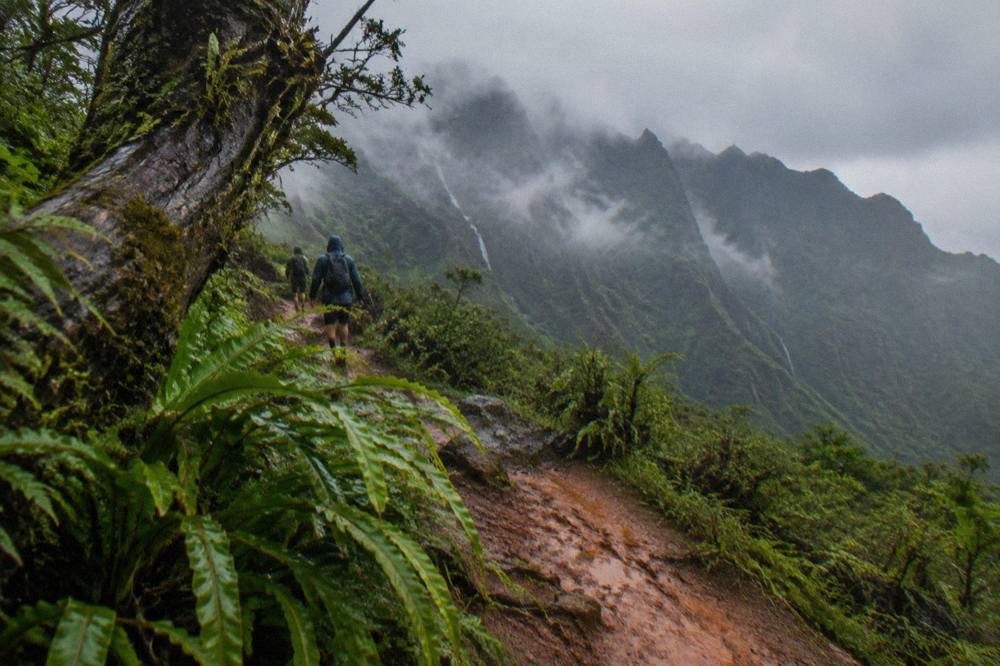
For flights, rain itself is less of a barrier than people assume. The listings on this site describe weather cancellations being rescheduled or refunded, and operators fly in light rain routinely. The real constraint is cloud cover over the two interior highlights, Waialeale and Waimea Canyon, plus wind over the Na Pali Coast. Reports after the September 2026 storm noted Lihue helicopter tours flying with fewer slots than usual, so the practical advice in any wet month is to book early in your stay, not on your last day, and to hold a morning slot if one is available.
The Blue Hawaiian 50-Minute Flight, the eco-adventure loop out of Lihue, is the most-reviewed tour on this roster at 4.8 from 2,065 reviews, from $489 per person. A guest review on the listing calls it a "Must do experience, such a diverse island that can really only be appreciated by air. Smooth flight, great narration by our pilot Alex as we traversed the island. Definitely the highlight of our Hawaiian holiday." In the wet months that flexibility is the point: the same booking that shows you a waterfall-charged Waialeale on a good day can be moved or refunded on a bad one.
Is Winter A Bad Time For The North Shore?
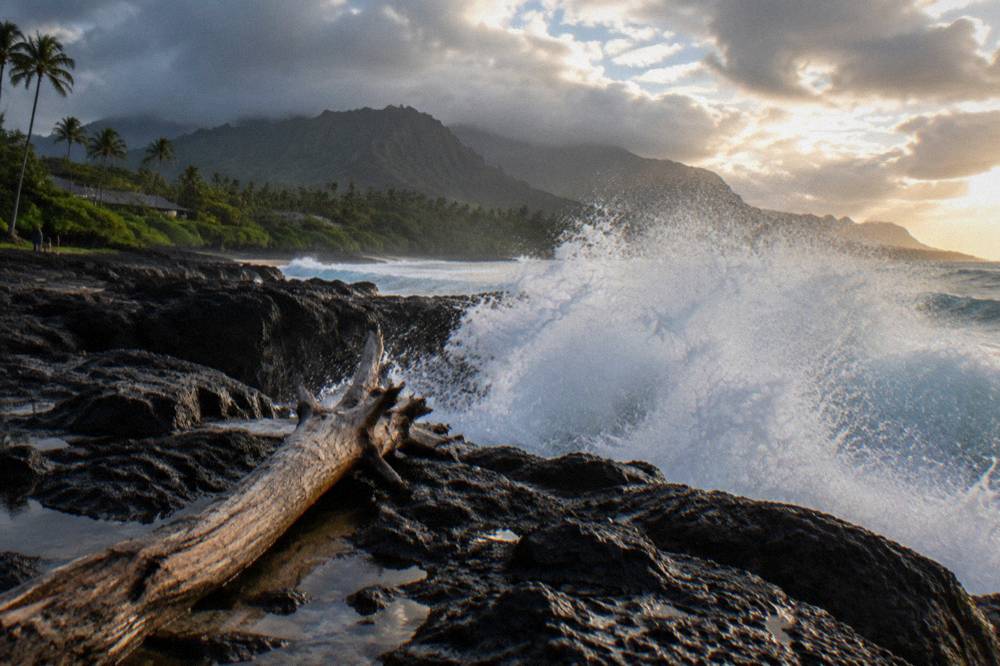
Winter, roughly October through April, brings North Shore surf of 6 to 15 feet or more, and that changes the character of the north coast from a swimming destination into a watching one. For a traveler whose Kauai plan is built around calm Hanalei or Kee water, that is the single clearest "not this month" on the calendar. In summer the same shores run 1 to 3 feet.
The seasonal flip is the island's most predictable pattern. Winter swell arrives from the north and west, and the shorelines around Hanalei Bay and Haena take it directly. Secondary surf-season sources put winter heights at 6 to 15-plus feet and summer at 1 to 3 feet, and even without an official forecast, anyone standing at a north shore beach in January can see the difference. What that means practically is that winter visitors swim on the south side, where Poipu's beaches sit in the lee of the winter swell, and watch the north shore rather than play in it.
The north shore also carries a second, separate winter issue that has nothing to do with surf: Kuhio Highway near Hanalei Bridge has flooded repeatedly, including a flood closure at the end of September 2026 reported by the county. A single flooded stretch of that highway can cut road access to Hanalei, Haena and the trailheads beyond, and it is the only practical driving route up the coast. Winter travelers should read the county's press releases and state access notices before committing to a north shore base.
There is a genuine upside worth stating honestly. Winter is when the waterfalls are at their fullest and when the island is at its most dramatic from the air. The trade-off is real, though: the same rain that feeds the falls also feeds the clouds that can hide them. Travelers who prioritize photography often prefer winter anyway and simply build in more buffer days, accepting that any single flight or boat booking has a higher chance of moving.
For ground access, the north shore's headline state park adds a reservation layer on top of the weather. Haena State Park requires advance reservations through its official system, released up to 30 days ahead with no same-day sales, and a daily visitor limit of 900 people, with non-residents paying entry plus a parking fee. That system operates independently of the weather, but the two compound: a winter storm that closes the highway makes the reservation worthless for that day, and the access situation for all DLNR lands follows DLNR notices.
What Does Hurricane Season Mean For A Kauai Trip?
Hurricane season runs June through November, and 2026 showed exactly what that can mean: Hurricane Lowell in September 2026 closed all DLNR lands on Kauai, including Kokee, Waimea Canyon Drive, Haena and the Kalalau Trail, with the state saying road clearing could take many more weeks. Reports said Lihue helicopter tours kept flying, with fewer slots than usual. Access to every state park and trail now follows DLNR notices.
This is the window no seasonal guide can honestly downplay, because it happened weeks before this article was written. The state's notice of 16 September 2026 closed all Department of Land and Natural Resources lands on Kauai to the public into the foreseeable future. Kokee Road sat behind a 24/7 roadblock. Waimea Canyon Drive was blocked by fallen trees in multiple sections. The official word on reopening is that access follows DLNR notices, and this page will not guess at dates. The current status of every park, road, lookout and trail on the island is a live question with a single authoritative answer at the DLNR site, and any Kauai plan built around state lands should check it.
What makes hurricane season complicated is that it overlaps the best weather. June through September contains the driest, calmest, clearest months in the Lihue normals, the small-surf season on the north shore, and the stretch sources most often describe as the most reliable for flights. Statistically it is the best time to come. The honest framing is that it is the best time to come with a plan B, because a single September storm reshaped the island's ground access in a way no month-by-month average captures.
For flights specifically, the picture after the storm was more encouraging than the ground picture. A local hotel recovery post reported helicopter tours from Lihue open and flying, with fewer slots than usual, and named Safari among operators flying. No listing can promise a flight will run, and every roster listing states free cancellation up to 24 hours before the start time, with weather cancellations rescheduled or refunded per the operators. The practical read for hurricane-season travel is that air tours are among the more resilient bookings on the island, while state-park plans are among the least. If you would rather weigh the water option too, our honest take on whether the Na Pali boat tour is worth it covers what a boat sees from the sea and when a flight from Lihue makes more sense.
There is also a fee context worth knowing. Hawaii's Green Fee took effect in January 2026, raising the state Transient Accommodations Tax by 0.75 percentage points to 11 percent, on top of county surcharges and the general excise tax. It does not change with the season, but it is part of the real cost of any 2026 trip and belongs in any honest budget conversation alongside the from-prices on tour listings.
When Do Crowds Peak On Kauai?
Kauai does not publish a verified month-by-month visitor count, so there is no honest "busiest month" figure to print. What is verified: the island recorded 1,407,632 air arrivals in 2025, spending $2.94 billion, and 73.2 percent of those visitors were repeats. Secondary sources point to mid-December through March and the June-to-August school stretch as the peak windows, with April-to-June and August-to-October noted for lighter pace.
The honest version of the crowd question starts with what the data can and cannot say. The state's annual visitor report gives a yearly total and a daily census figure, 28,577 visitors on an average day in 2025 against a resident population of about 73,400, but it does not break arrivals down by month in the verified files. So this page will not invent a "December is the busiest month" claim. What several secondary travel sources do agree on is that the island feels busiest over the winter holiday stretch and the summer school holidays, and that the April-to-June and September-to-October shoulder periods offer pleasant weather with comparatively lighter demand.
That shoulder logic lines up neatly with the rainfall table earlier in this article. April and May combine two of the drier months in the Lihue normals with the tail of the small-surf season on the north shore, before the summer crowds arrive. September and October sit after the summer peak and before the wet season, though October carries a caveat: it is inside hurricane season, and September 2026 demonstrated exactly what that can do to a trip's ground plans.
The crowd question also interacts with the closure situation in a way worth naming directly. Even in a quiet month, a closed park is a closed park. Non-resident entry to Waimea Canyon State Park is $5 per person plus $10 per vehicle for a non-commercial car, with one ticket covering both Waimea Canyon and Kokee when the parks are accessible, and lookouts at mile markers 10, 13.5, 18 and 19 along the drive-up route when open. None of that is usable while the DLNR closure stands, and the honest answer to "when should I go for Waimea Canyon" is: whenever the DLNR notices say access has returned, then in the dry months.
Can You Still Fly When The Weather Turns?
Yes, often. Every listing on this site states free cancellation up to 24 hours before the start time, and weather cancellations are rescheduled or refunded per the operators. Rain alone rarely grounds a Kauai flight; cloud over the interior and wind over Na Pali do. The practical rule for any wet-season trip is to book a flight early in your stay and hold a backup day, so a weather move costs you a slot, not the experience.
The weather mechanics are worth understanding because they turn an unpredictable island into a plannable one. Flights from Lihue cross the island's interior, where Waialeale's crater generates its own weather, and the standard 50-to-65-minute circle-island route covers the Na Pali Coast, Waimea Canyon, Manawaiopuna Falls from the air, the Waialeale crater weather permitting, and the Hanalei and Princeville stretch. When the crater is socked in, pilots reroute rather than cancel, and a flight that skips the summit can still deliver the coast and canyon. Operators themselves say the time of day makes little difference, though a local hotel guide suggests morning slots, and trade winds and cloud cover cause cancellations or route restrictions most often after late morning.
The FAA's Hawaii-specific rules shape all of this. Under 14 CFR 136.75, air tours in Hawaii may not fly below 1,500 feet above the surface except for takeoff, landing, an ATC clearance or an authorized deviation, and single-engine rotorcraft flying beyond the shore must carry flotation gear with passengers briefed on ditching before takeoff. A performance plan covering weight and balance must be completed before each flight, which is why every operator weighs passengers at check-in. None of that changes with the season, but it explains why a windy, turbulent day is a canceled day rather than a bumpy one: the operators plan conservatively.
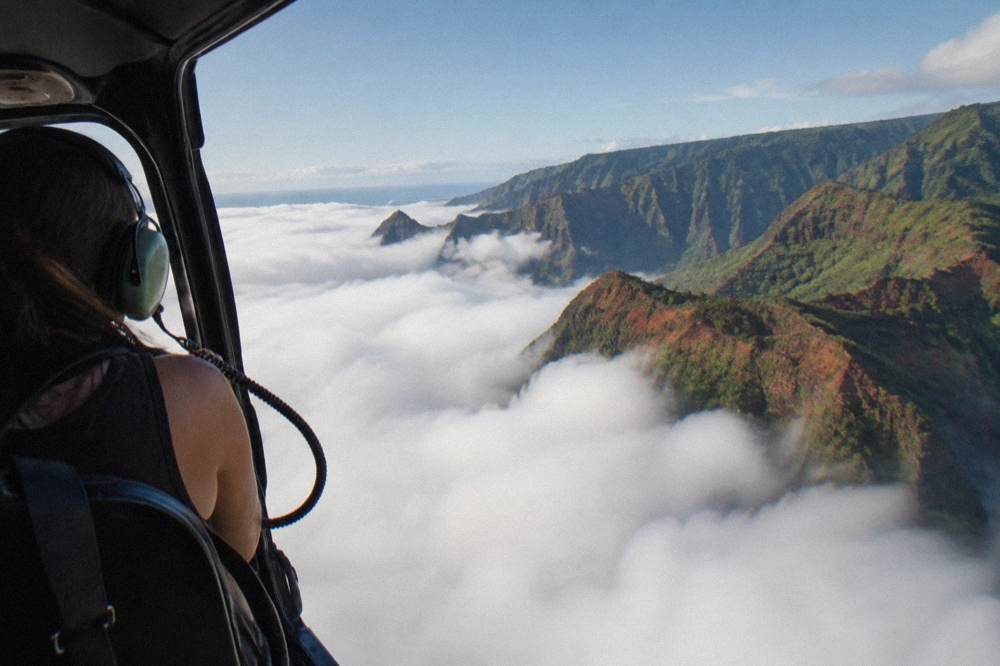
For travelers who want the most flight for a weather-flexible booking, two formats on this roster stand out. The 60-minute doors-off MD500 flight from Jack Harter carries at most four passengers, from $460 per person, with the pilot narrating canyons, falls and coast; a guest review on the listing says "Arthur was our pilot and he narrated the whole ride very well. We went in and out of canyons, gorges, seashores and mountains. What a breath taking view!" Air Kauai's doors-off flight sets a minimum age of 10, and 16 for an outside seat; Jack Harter's doors-off tours require a comfort seat over 250 lbs, per the listings.
The other is the private all-window-seat flight from Mauna Loa, a doors-off charter of about 55 minutes from $384 per person in which every passenger gets a window, passing Manawaiopuna Falls, Waimea Canyon, Na Pali and Waialeale, with life preservers supplied per the listing. A guest review calls it "This was an awesome experience. Totally worth it and checked another bucket list item. Thanks so much for a great time. You made our 40th anniversary trip sooo memorable." Private formats have an advantage in rough planning months: one booking covers your whole group, so a weather reschedule moves everyone at once instead of a shared cabin's worth of strangers.
One more planning note belongs here because it is the question underneath the whole article. If a storm or a closure reshapes your trip, the things that keep working are the ones that never depended on state land access in the first place: beaches, which are public in Hawaii, coastal roads that are open, and air tours that see the canyon and coast from above while ground access follows DLNR notices. Readers comparing the full set of flight formats can start with the doors-off versus doors-on comparison, and the island's best time to visit guide covers the flip side of this page, the windows that reliably deliver. For flight-specific timing, the best time of day for a Kauai helicopter tour breaks down morning versus afternoon slots in detail.
The honest summary is that Helicopter Tours Kauai exists partly for exactly these months: the island's ground highlights have hard seasonal limits, but the view from above has softer ones. The eco-adventure loop from Lihue, the doors-on family flight and the Safari waterfall flight in the band below all state free cancellation up to 24 hours before the start time, and all three see the canyon, the coast and the falls in a single loop.
Common Questions About Visiting Kauai
When Not To Visit Kauai?
The weakest windows are March and the December-to-January stretch, the wettest months in the Lihue rainfall normals at 5.61 and 4.64 inches respectively, plus the October-to-April surf season that makes the North Shore a watching destination rather than a swimming one. Hurricane season, June through November, adds storm risk, and the September 2026 DLNR closures show how much a single storm can change ground access.
What Is The Rainiest Month On Kauai?
March, with an average of 5.61 inches of rain at the Lihue station in the 1991-2020 NOAA normals. December is second at 4.64 inches and November third at 4.03. The driest months are July at 1.75 inches and June at 1.79.
Is Winter A Bad Time To Visit Kauai?
It depends on the plan. Winter brings 6 to 15-plus foot surf to the North Shore and the year's heaviest rain, but also the fullest waterfalls and the most dramatic scenery. Travelers who build in buffer days and keep plans flexible often enjoy it; travelers who need calm north shore water or a guaranteed flight day should pick another season.
Do Helicopter Tours Get Cancelled For Weather?
Yes, and every listing on this site states free cancellation up to 24 hours before the start time, with weather cancellations rescheduled or refunded per the operators. Cloud over the interior and wind over the Na Pali Coast cause more cancellations than rain itself, and booking early in your stay leaves room for a rebook.
Are Kauai State Parks Open After Hurricane Lowell?
The DLNR notice of 16 September 2026 closed all DLNR lands on Kauai, including Waimea Canyon, Kokee, Haena and the Kalalau Trail, and the state said road clearing could take many more weeks. Access follows DLNR notices, and no reopening date is published, so check the DLNR site before planning any state park visit.
When Is The Best Time To Visit Kauai?
The driest, calmest stretch in the Lihue normals runs April through September, with June and July the driest months and summer bringing 1 to 3 foot surf to the North Shore. April-to-June and September-to-October are noted for pleasant weather with lighter demand, though September and October sit inside hurricane season, so keep plans flexible.