Which Side Of Kauai Is Best To Stay On?
A practical comparison of Kauai's north, south and east shores for visitors who want to be near their helicopter departure, with rainfall, surf season and flight base facts.
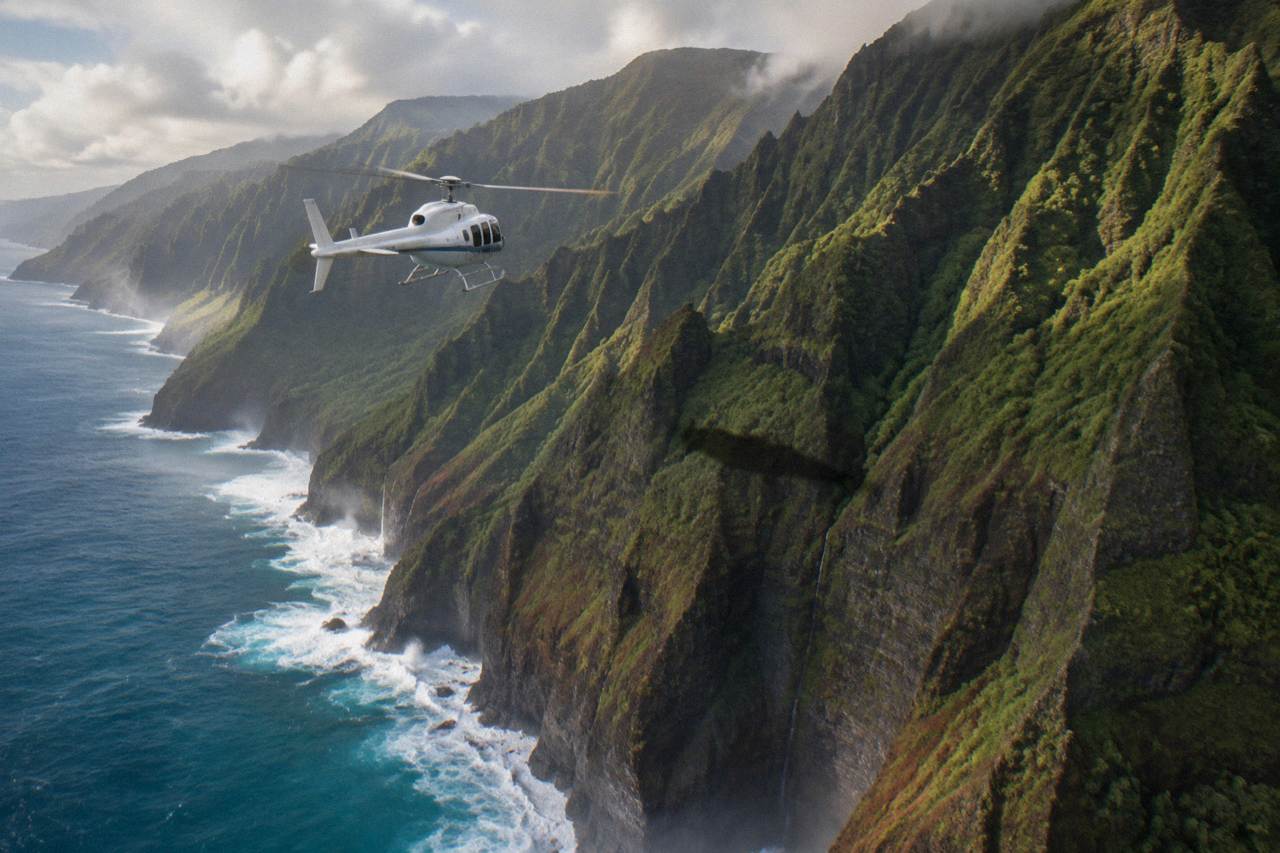
Kauai packs a 16-mile coastline of cliffs up to 4,000 feet, a canyon about 14 miles long, and one of the wettest summits on earth into 552 square miles, and no two shores of the island feel alike. The side you choose as a base decides whether you wake to North Shore rain or Poipu sunshine, and, just as important for this site's readers, how close you sleep to a helicopter departure point.
Which Side Of Kauai Is Best To Stay On?
For most travelers combining a stay with a helicopter flight, the east side around Lihue is the most practical base, since nearly every tour on this roster departs from heliports and offices clustered around Lihue Airport, and the east side sits midway between the north and south shores. The north shore around Princeville suits those seeking dramatic scenery and the island's only non-Lihue departure, while Poipu on the south side is the drier, sunnier pick for beach time.
The honest way to answer this question is to separate three things that often get blended together: where the weather is kindest, where the scenery is most dramatic, and where the flights actually leave from. On Kauai those three answers point in different directions.
The south shore around Poipu is the driest, most reliable-sunshine base, and it is a reasonable drive to the Lihue departure points. The north shore around Princeville and Hanalei is the greenest and most cinematic, and it holds one genuine advantage for this site's readers: the Discover Kauai Helicopter Tour from Princeville, the only north-shore departure listed here, lifts off from Princeville Airport. The east side, the Coconut Coast around Lihue and Kapaa, is the logistics winner, with the operator bases strung along Ahukini Road and Akahi Street minutes from the airport.
One more thing belongs in this opening answer. After Hurricane Lowell, the DLNR notice closed all DLNR lands on Kauai, including Kokee State Park, Kokee Road, Haena and the Kalalau Trail, and access since then follows DLNR notices. A base choice made purely around ground access to state parks needs that caveat; a flight, by contrast, sees the canyon and coast from the air regardless of what the trailheads are doing. That is exactly why many visitors this season are weighting the helicopter side of their trip more heavily, and Helicopter Tours Kauai keeps the live listings for every departure point on one roster.
Where Kauai Helicopter Tours Actually Depart From
Nearly all helicopter tours on our roster depart from the Lihue area, with operators like Blue Hawaiian, Safari, Air Kauai, Jack Harter, Ali'i Kauai Air Tours, and Mauna Loa based around Lihue Airport along Ahukini Road and Akahi Street. The sole exception is the Discover Kauai Helicopter Tour, which lifts off from Princeville Airport on the north shore. Port Allen and Kapaa are not departure points, so staying near Lihue gives you the most options.
That concentration is the single most useful logistical fact on this page. The operator bases sit within a few minutes of one another: Blue Hawaiian at its Lihue Airport heliport, Safari on Akahi Street, Air Kauai and Jack Harter on Ahukini Road, Ali'i Kauai Air Tours at the Lihue Airport Commuter Terminal, and Mauna Loa at its own heliport on Ahukini Road. If you stay anywhere in the Lihue or Kapaa area, you are a short drive from every one of them, and none of the listings includes hotel pickup, so you drive yourself or arrange your own transport to the check-in point.
The one exception matters more than its size suggests. Princeville Airport on the north shore hosts the Blue Hawaiian Discover flight, a 45-minute tour over Hanalei Bay and the Na Pali Coast in a cabin of up to four, from $579 per person, carrying a 4.9 rating from 34 reviews. For north-shore guests that is a departure you can reach without driving back across the island, and it is wheelchair accessible, as is the Blue Hawaiian Eco Adventure from Lihue. The Princeville departure, 45-minute Discover flight is worth a look before you commit to a Lihue-based tour, and our fuller guide to Kauai helicopter departure points breaks down every base.
A note on timing: reports after the storm said Lihue helicopter tours were flying with fewer slots than usual, so read the booking page for current availability rather than assuming a same-day seat. Weather cancellations are rescheduled or refunded per the operators, and every listing on the roster states free cancellation up to 24 hours before the start time. Once your seat is confirmed, the question of gratuities tends to come up, and our guide to tipping your helicopter pilot in Hawaii lays out what the booking notes and operators actually say.
| Tour | Operator | Departure point | Duration | From (per person) |
|---|---|---|---|---|
| Kauai Eco Adventure Helicopter Tour | Blue Hawaiian | Lihue Airport (Blue Hawaiian heliport) | 50 minutes | $489 |
| Kauai Deluxe Waterfall Safari | Safari Helicopters | Akahi St, Lihue | 55 minutes | $336 |
| Kauai Exclusive: Jurassic Canyon Landing | Safari Helicopters | Akahi St, Lihue | 1 hour 30 minutes | $396 |
| Ohana Doors-On Helicopter Tour | Air Kauai | Lihue Airport heliport | 45 minutes | $349 |
| Doors-Off Helicopter Adventure | Air Kauai | Lihue Airport heliport | 50 minutes | $402 |
| 60-Minute Doors-Off MD500 Adventure | Jack Harter | Ahukini Rd, Lihue | 60 minutes | $460 |
| Heart of the Island Doors-Off Tour | Jack Harter | Ahukini Rd, Lihue | 18 minutes | $221 |
| Private Doors Off: Ultimate Waterfalls | Ali'i Kauai Air Tours | Lihue Airport Commuter Terminal | 1 hour 15 minutes | $425 |
| Private Doors-Off, All Window Seats | Mauna Loa Helicopters | Mauna Loa heliport, Ahukini Rd | 55 minutes | $384 |
| Discover Kauai Helicopter Tour | Blue Hawaiian | Princeville Airport | 45 minutes | $579 |
The North Shore: Princeville, Hanalei And The Wet Green Side
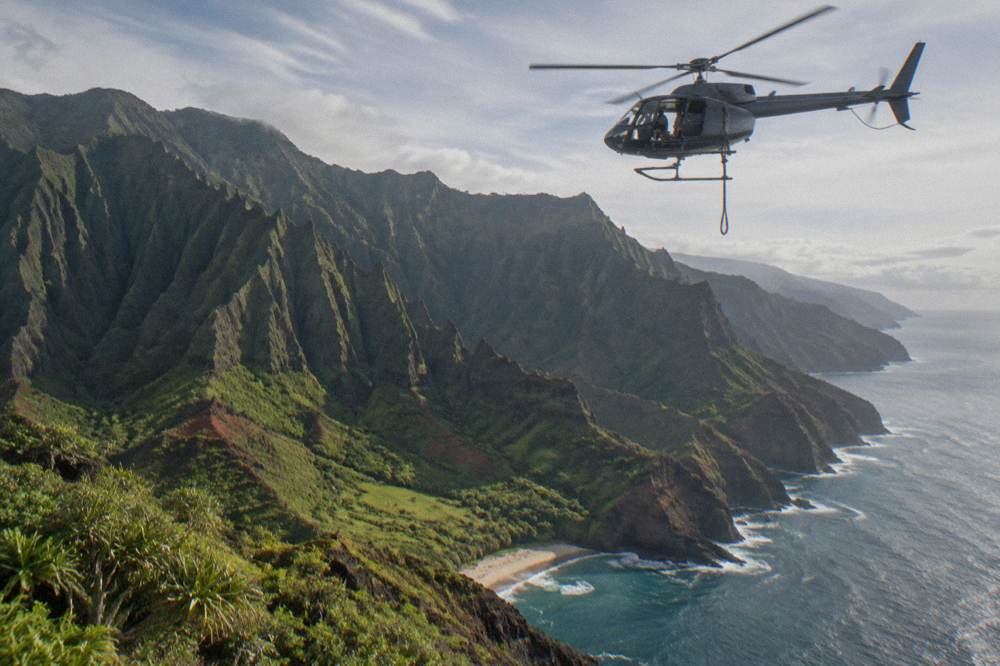
The north shore is Kauai at its most dramatic: Hanalei Bay, the sea cliffs of Na Pali to the west, and the wettest weather on the island. It is also the only shore with its own helicopter departure, the Princeville-based Discover flight, which saves north-shore guests the drive back to Lihue. The trade-off is rainfall, winter surf, and ground access to Haena and the Kalalau Trail that follows DLNR notices after the storm.
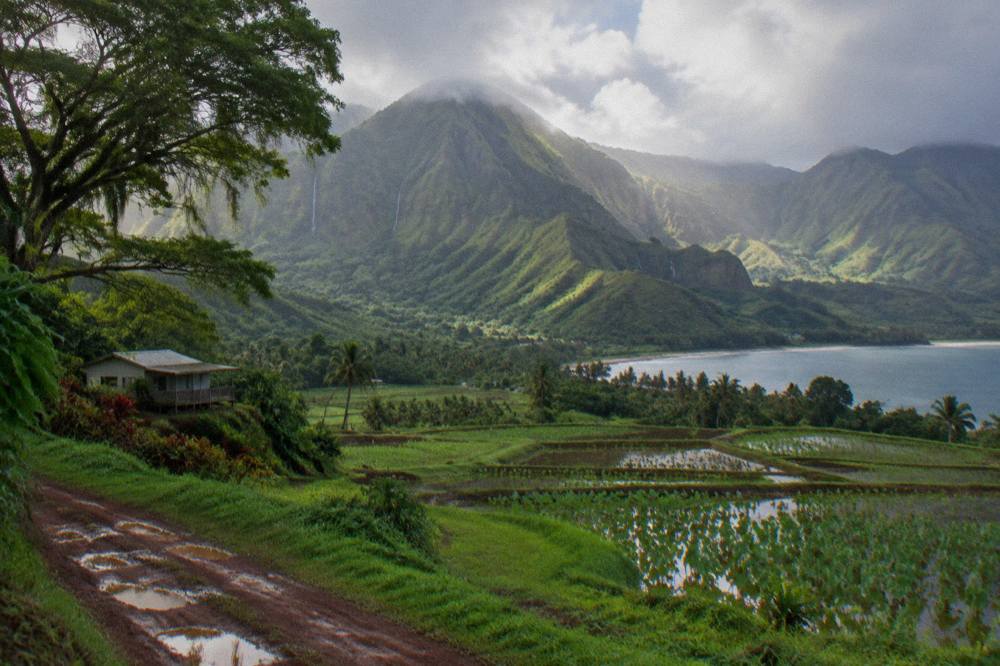
Princeville sits on a bluff above the north coast, and the scenery around it is the reason people book here: taro fields, waterfalls, and the Na Pali Coast beginning its 16-mile run of cliffs just past Hanalei. For a visitor whose priority is a flight over that coastline, staying north has a real logistical advantage. The Discover Kauai Helicopter Tour from Princeville covers Hanalei Bay and Na Pali in 45 minutes from Princeville Airport, and the state's aviation pages note that Princeville permits helicopter operations only by the existing resident tour operator, daytime visual flight only, with restrictions. That single-operator setup is worth knowing: the north-shore departure is one product, not a menu.
The weather is the other half of the story. The north shore catches far more rain than the south, which is precisely why it is so green, and the winter surf is a genuine factor: North Shore swell runs about 6 to 15+ feet from roughly October to April, dropping to 1 to 3 feet in summer. That matters less for a helicopter, which flies above it, and more for beach plans. Rainfall over the interior, especially near Waialeale with its roughly 450 inches a year, can cloud the summit views, so a morning slot is the safer bet for any flight, and operators themselves say the time of day makes little difference while local guides suggest mornings for the calmest air.
Ground access is the honest caveat. The DLNR notice closed Haena and the Kalalau Trail along with the other DLNR lands on Kauai, and access follows DLNR notices; Haena also requires advance reservations through its booking system when it is open, with a daily visitor limit of 900 and no same-day sales. None of that touches your flight, which sees the coast from the air, but it should temper any plan to pair a north-shore stay with a Haena day hike right now. Our Na Pali Coast guide covers what the coastline offers and how flights see it.
The South Side: Poipu And The Sunny Microclimate
The south shore around Poipu is Kauai's driest, sunniest base, the classic choice for travelers who want beach days and pool weather alongside their flight. It has no helicopter departure of its own, so every tour means a drive north to the Lihue bases, but that drive is the price of the island's most reliable sunshine. For visitors whose trip is built around water and sun with one flight folded in, the south side is the comfortable answer.
Poipu's appeal is straightforward: it sits on Kauai's leeward side, shielded from the trade-wind rainfall that soaks the north and the interior, and its microclimate is noticeably drier and warmer than Hanalei's. If your mental image of a Hawaii trip is a sunny beach rather than a misty jungle, the south shore delivers it more often. All Hawaii beaches are public with free access, though parking or state park fees can apply at some access points, so the beach part of a Poipu stay costs little beyond lodging.
For this site's readers, the south side's one weakness is distance from the departure points. Every Lihue-based tour, from the Blue Hawaiian 50-minute eco flight to Safari's canyon-rim landing tour, means driving up to the Ahukini Road and Akahi Street bases. That is not a hardship, but it does mean an early start for a morning flight slot, which is when conditions tend to be calmest. Guests who book the Safari 55-minute flight, from $336 per person with all fees and taxes included per the listing, will check in at the Akahi Street office; guests over 250 lbs may need an extra comfort seat per Safari's own FAQ, a policy worth reading before you drive up.
The south side also pairs well with Waimea Canyon, geographically at least. Waimea Canyon Drive was blocked by fallen trees in multiple sections after the storm and Kokee Road had a 24/7 roadblock at its junction, with the DLNR notice saying road clearing may require many more weeks, so drive-up access to the lookouts at mile markers 10, 13.5, 18 and 19 follows DLNR notices. A helicopter tour over the canyon, about 14 miles long and up to 3,600 feet deep per the state parks page, is not subject to those road closures; the flight sees it from the air. One guest review of the Safari flight captures the aerial version: "Amazing views of the island! Not as scary as I thought it would be. Enjoyed the pilot's narration of the scenery. And front desk staff were great. Helicopter sat 2 in front and 4 in the rear. There was some glare at times off our arms and legs - wearing darker clothing helps reduce this." If you're still sorting out how long to stay, our guide to how many days you really need on Kauai shows where a canyon flight fits and why a weather buffer matters.
The East Side: Lihue, Kapaa And The Coconut Coast
The East Side, encompassing Lihue, Kapaa, and the Coconut Coast, is the island's most practical base, offering central access to helicopter tours, a moderate rainfall sweet spot between the soggy north and arid south, and the shortest post-flight drive, making it the top choice for first-time visitors.
Kapaa and the Coconut Coast give you the island's most flexible base. You are close to the airport, close to the Ahukini Road heliports, and positioned to drive north to Hanalei or south to Poipu depending on the day's weather, which on an island this varied is a real advantage: if the north shore is socked in with rain, you drive south, and vice versa. Lihue itself is where the working infrastructure is, including the commuter terminal used by Ali'i Kauai Air Tours for its private doors-off flight.
The flight options from an east-side base are the widest on the island. The Blue Hawaiian eco flight, 50 minutes from $489 per person and the most-reviewed tour we track at 4.8 from 2,065 reviews, loops Waialeale, Hanalei Bay, Na Pali, Waimea Canyon and Manawaiopuna Falls. Air Kauai's doors-off adventure, from $402 per person, flies 50 minutes with goggles supplied and a minimum age of 10, and 16 for the outside seats. Jack Harter's 60-minute MD500 doors-off flight, from $460 per person, takes at most four passengers, with transport between the office and the heliport included, as on both Jack Harter listings. A guest review of that flight reads: "Arthur was our pilot and he narrated the whole ride very well. We went in and out of canyons, gorges, seashores and mountains. What a breath taking view! This ride was the best activity I've done. You can see the whole island in an hour. I was just in awe!"
For families, the Air Kauai Ohana doors-on flight deserves a mention: 45 minutes from $349 per person, with infants under 24 months riding on a lap, one of the few listings that addresses the youngest travelers at all. Our deeper comparison of Kauai helicopter tours with kids covers ages and lap-child policies in full.
How Rainfall And Surf Season Should Shape Your Choice
Kauai's rainfall is strongly seasonal and strongly regional: Lihue averages 5.61 inches in March against 1.75 in July, while the north shore's winter surf runs 6 to 15+ feet and summer drops to 1 to 3 feet. Summer, May through September, offers the most reliable flight conditions with clearer skies over Na Pali and the interior valleys. If you have flexibility on dates, that seasonal pattern matters more than which shore you book.
The numbers behind that summary come from the Lihue station's official climate normals, and they tell a clean story. March is the wettest month at 5.61 inches of rain on average, June and July the driest at 1.79 and 1.75 inches, with December and November also running wet at 4.64 and 4.03 inches. Temperatures barely move: average highs run from 78.1 in February to 85.3 in September, so cold is never the issue, only rain and wind. The NOAA climate normals for Lihue are the source for those figures.
| Month | Avg rainfall, Lihue (in) | Avg high (F) | What it means for a stay |
|---|---|---|---|
| January | 2.78 | 78.6 | Moderate rain, peak North Shore surf |
| March | 5.61 | 78.5 | Wettest month, interior summits often clouded |
| June | 1.79 | 83.3 | Driest stretch begins, calm surf |
| July | 1.75 | 84.6 | Driest month, best flight odds |
| September | 2.18 | 85.3 | Warmest month, surf still small |
| November | 4.03 | 81.2 | Wet season returns, big surf building |
| December | 4.64 | 79.1 | Wet and busy, flights weather-dependent |
The practical reading of all this: a summer trip softens the differences between the shores, because the whole island is drier and the north shore's surf is small. A winter trip sharpens them, because the north will be wet and dramatic while Poipu stays comparatively dry. And whatever the season, the weather over Waialeale and Na Pali is what actually decides whether your flight runs as planned; trade winds and cloud cover frequently cause route restrictions or cancellations, and every listing reschedules or refunds in that case.
Matching Your Base To The Flight You Want
To be minutes from every major helicopter base, stay east in Lihue or Kapaa and book a morning flight. If you're based north, choose the Princeville Discover flight to avoid the long drive. Poipu's sunshine is worth the drive if the flight is a secondary activity; all private and doors-off tours still depart from Lihue.
The private and doors-off category makes this concrete. Ali'i Kauai Air Tours runs its private doors-off flight, from $425 per person for 75 minutes with a minimum of two paying passengers, out of the Lihue Airport Commuter Terminal; the listing carries a 5.0 rating from 1,794 reviews, the strongest review pool on the roster. Mauna Loa Helicopters flies a private doors-off tour where every passenger gets a window seat, 55 minutes from $384 per person, from its Ahukini Road heliport. Both are Lihue-area departures, so where you sleep changes nothing except the morning drive.
Doors-off flights deserve a special note here, because the base choice interacts with the format. A doors-off flight means an open cabin, a 5-point harness anchored to the airframe, and on the Air Kauai listing only a lanyarded phone allowed on board. You will want to arrive unhurried, and the weigh-in at check-in, which the operators run per FAA weight-and-balance rules, goes faster without a long drive behind you. An east-side base makes an early doors-off slot painless; a Poipu base means setting out earlier.
For a fuller comparison of the two formats, see our guide to doors-off helicopter flights on Kauai, and for picking among the operators themselves, the best helicopter tour comparison lays out price, duration and review pool side by side. Whichever shore you choose, the roster's weight and age policies vary by operator, so read the listing for your specific flight before you book; there is no universal threshold, and each operator prints its own.
One more pairing worth naming: if you stay north and want the full-island experience that the Princeville flight cannot give you, the Blue Hawaiian eco flight from Lihue is the most-reviewed route on the roster, and a guest review sums up the appeal: "Must do experience, such a diverse island that can really only be appreciated by air. Smooth flight, great narration by our pilot Alex as we traversed the island. Definitely the highlight of our Hawaiian holiday."
Common Questions About Which Side Of Kauai Is Best To Stay On
Which Side Of Kauai Is Best To Stay On?
For most visitors balancing weather, scenery and flight logistics, the east side around Lihue and Kapaa is the strongest base: it sits minutes from nearly every helicopter departure on the island and midway between the north and south shores. The north shore suits scenery-first travelers, especially those booking the Princeville departure, and the south shore around Poipu is the driest, sunniest choice.
Is The North Shore Or South Shore Of Kauai Better?
The north shore is greener and more dramatic, with Hanalei Bay and the Na Pali cliffs, but it is wetter and its winter surf runs 6 to 15+ feet. The south shore around Poipu is drier and sunnier with calmer winter ocean conditions. If your days are beach-heavy, stay south; if they are scenery-heavy, stay north, and consider the Discover Kauai Helicopter Tour from Princeville, from $579 per person.
Where Do Kauai Helicopter Tours Depart From?
Nearly every tour departs from the Lihue area: Blue Hawaiian, Safari, Air Kauai, Jack Harter, Ali'i Kauai Air Tours and Mauna Loa all operate from bases around Lihue Airport along Ahukini Road and Akahi Street. The one exception is the Blue Hawaiian Discover flight from Princeville Airport on the north shore. No listing includes hotel pickup, so you drive to your check-in point.
Can You Stay On The North Shore And Still Do A Helicopter Tour?
Yes. The Discover Kauai Helicopter Tour from Princeville lifts off from Princeville Airport, a 45-minute flight over Hanalei Bay and the Na Pali Coast in a cabin of up to four, from $579 per person with a 4.9 rating from 34 reviews. It is the only north-shore departure on the roster, and it is wheelchair accessible, as is the Kauai Eco Adventure tour from Lihue.
What Is The Rainiest Month On Kauai?
March is the wettest month at the Lihue climate station, averaging 5.61 inches of rain, with December close behind at 4.64 inches. July is the driest at 1.75 inches. The wet months cloud the interior summits more often, so if clear crater views matter to you, summer offers better flight odds and the whole island is drier.
Are Kauai Helicopter Tours Flying After Hurricane Lowell?
Reports after the storm said Lihue helicopter tours were flying with fewer slots than usual, and operators including Blue Hawaiian and Safari were reported flying. Ground access is a separate matter: DLNR lands on Kauai, including Kokee, Haena and the Kalalau Trail, were closed by the DLNR notice and access follows DLNR notices. Read the booking page for current flight availability, and remember every listing offers free cancellation up to 24 hours before the start time.