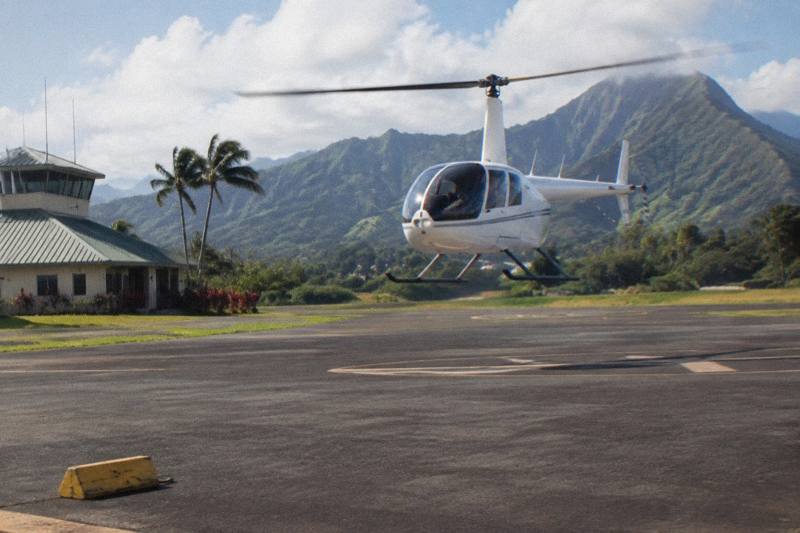
How Risky Is A Helicopter Tour?
An honest look at helicopter tour risk on Kauai: the federal rules that govern every flight, the two documented incidents and what the NTSB found, and what no source can tell you.

Flying over an island whose canyon walls rise thousands of feet and whose interior is one of the wettest places on earth sounds, to a lot of readers, like a gamble. That instinct deserves better than a shrug or a slogan. The honest answer is that helicopter touring on Kauai is a regulated commercial activity, governed by a federal rule written specifically for Hawaii, flown by operators holding air carrier certificates, and it carries a real risk that no verified source reduces to a single number. This article works through what the regulation requires, what the two documented incidents on this island found, and what the operators themselves do before every departure. To see that incident record laid out plainly, the documented history of helicopter crashes on Kauai pairs the NTSB findings with the FAA rules that govern every island air tour.
What this article will not do is invent a statistic. There is no consolidated risk figure, no per-flight accident rate and no year-by-year crash count in the verified sources behind this site, and printing one would be dishonest. Instead, the pieces that actually inform a decision are laid out plainly: the rulebook, the record, and the layers of preparation between a reader and the sky.
How Risky Is A Helicopter Tour?
The honest answer is that a Kauai helicopter tour is a regulated, weather-dependent commercial flight with a documented history that includes two investigated incidents, and that no verified source publishes a single risk figure for it. The risk that exists is managed by federal rules written for Hawaii, by Part 135 certified operators, by pre-flight performance planning and by weather cancellation. It is not zero, and no operator or writer should claim it is. Once you have weighed that risk for yourself, the free things to do on Kauai around your flight can help you plan the rest of your day on the ground.
That is the frame. Now the substance behind it.
Every flight on this site's roster, from the 18-minute doors-off hop into Waialeale to the 90-minute canyon rim landing flight, operates under the same federal framework: 14 CFR Part 136, Subpart D, a set of special operating rules that apply to air tours in Hawaii specifically, layered on top of the ordinary certification rules for commercial operators. Most Kauai air tour operators hold FAA Part 135 air carrier certificates, the stricter standard for commercial flying, which mandates tighter maintenance, pilot rest and drug testing requirements than the general Part 91 rules that private flying follows. That distinction matters. A reader booking the 50-minute shared eco flight from Lihue is not buying a ride with a hobbyist; the operator behind it is a certificated air carrier answerable to the FAA on every departure. If you want a sense of how that level of oversight compares with the drive to the heliport, this breakdown of helicopter versus car safety on Kauai covers what the record shows and what you can check yourself.
The question of risk also has to be separated from the question of comfort. A doors-off flight feels more exposed because it is, sitting beside an open door frame with the Na Pali cliffs in full view is a different sensory experience from watching them through a sealed cabin. But feeling riskier and being governed differently are not the same thing, and the doors-off listings carry their own harness, age and weight rules as a result. The sections below take each layer in turn.
One more piece of framing before the rulebook. Risk on Kauai right now also has a ground dimension. After Hurricane Lowell in September 2026, the DLNR notice closed all DLNR lands on Kauai, including Kokee State Park and Kokee Road, and reports said Lihue helicopter tours were flying with fewer slots than usual. Ground access to the canyon and the coast follows DLNR notices, and this site reports those closures without predicting reopenings. Flights see the canyon and coast from the air; whether a reader can drive or hike to them is a separate question with a separate answer, and current access is best checked on the DLNR site.
What The Federal Rules Require Of Every Hawaii Air Tour?
Under 14 CFR 136.75, every Hawaii air tour must stay at least 1,500 feet above the surface unless it is taking off, landing, or operating under an air traffic control clearance or FAA authorization. Operators must also carry flotation capability beyond the shore, prepare a performance plan before each rotorcraft flight, and give passengers a ditching briefing, because these tours fly over water, cliffs and shifting weather.
The regulation is worth reading in its own words, because it is unusually specific to the situation on this island. The altitude floor, the flotation rule, the performance plan and the ditching briefing each address a hazard that is real here rather than hypothetical: an engine problem over open water, a heavy helicopter at a high-altitude hover, or an off-airport landing near a coastline.
| Provision of 14 CFR 136.75 | What it requires | What it means on a Kauai flight |
|---|---|---|
| 136.75(d), altitude floor | No air tour below 1,500 ft above the surface over any area of Hawaii, except takeoff, landing, ATC clearance or Administrator authorization | Flights over the Na Pali Coast and Waimea Canyon cruise above a regulated floor, with limited FAA-authorized deviations only to stay in visual conditions |
| 136.75(a), flotation | A single-engine rotorcraft may not fly beyond the shore unless it is amphibious, has adequate floats, or every person wears approved flotation gear | Ocean segments along the coast are flown with flotation provisions on board or worn |
| 136.75(b), performance plan | A performance plan covering weight, center of gravity and hover limits must be completed before each air tour flight in a rotorcraft | The weigh-in at check-in is not a formality; it feeds a required pre-flight calculation |
| 136.75(e), ditching briefing | Before takeoff, for any segment beyond the ocean shore, passengers are briefed on water ditching, flotation use and emergency egress | The safety briefing before a coastal flight is a regulatory requirement, not operator theater |
The full text is published by the eCFR, and it was amended as recently as November 2024, which is a fair signal that the rule is actively maintained rather than a legacy document. The FAA has also published a statement outlining Hawaii air tour safety improvements, including the authorization framework that allows limited deviations below 1,500 feet solely so a pilot can remain in visual meteorological conditions and avoid unforecast cloud.
For a reader weighing risk, the practical reading is this: the altitude floor and the flotation rule exist because the FAA looked at Hawaii operations and wrote rules for their specific hazards. The performance plan requirement is why every operator on this roster weighs passengers at check-in. The ditching briefing is why the pre-flight safety talk on a coastal route covers water landings explicitly. None of this eliminates risk, and this article will not pretend it does, but it is the difference between a flight governed by a Hawaii-specific rulebook and a flight governed by none.
There is one more regulatory thread worth naming honestly. A Blue Hawaiian petition to fly below 1,500 feet in specific Kauai areas drew public opposition and, per the verified sources, has no final resolution on record. Proposed state legislation on tour restrictions was introduced but not enacted. In other words, the rules described above are the rules in force, and nothing in the verified sources shows a new no-fly zone or altitude change taking effect.

What The Two Documented Kauai Incidents Actually Say?
The verified record for Kauai contains two investigated incidents: an 11 July 2024 Robinson R44 crash off the Na Pali Coast, where the NTSB final report found mast bumping from high winds and downdrafts, and a 26 March 2026 Hughes 369D air tour crash near Haena with three fatalities, where the NTSB preliminary report noted a pilot-reported vibration followed by a spin and the investigation remains open. Both are reported here factually, without victim detail and without invented statistics.
These are the facts on the record, and they are the only incidents this site reports, because they are the only ones in the verified source files. The March 2026 crash involved a Hughes 369D identified as N715KV, operating as an air tour off Kalalau Beach near Haena. The NTSB preliminary report noted a pilot-reported high-frequency vibration escalating in waves, followed by a spin before water impact. The investigation was open as of the latest verified reporting, a wrongful-death suit was filed in August 2026, and the operator, Airborne Aviation, was reported closed about 8 August 2026. The preliminary report details are public, and a preliminary report is exactly that, preliminary, with no final finding printed here.
The July 2024 crash involved an Aloha Helicopter Tours Robinson R44 Raven II off the Na Pali Coast. Here the NTSB work is complete: the final report determined mast bumping, caused by high winds and downdrafts, led to an in-flight breakup. The finding is a weather-and-aircraft interaction, and the final report coverage is the source this site cites. The R44 is a piston helicopter that the reporting notes has a higher susceptibility to mast bumping in turbulence, and it remains in use by some operators; the roster flights on this site are flown on single-engine turbine aircraft such as the MD500 and AStar or Eco-Star variants, per the fresh reporting on Kauai fleets.
| Incident | Aircraft and location | NTSB status and finding |
|---|---|---|
| 11 July 2024 | Robinson R44 Raven II, off the Na Pali Coast | Final report: mast bumping from high winds and downdrafts led to in-flight breakup |
| 26 March 2026 | Hughes 369D (N715KV), air tour off Kalalau Beach near Haena, 3 fatalities | Preliminary report: pilot-reported vibration then spin before water impact; investigation open; wrongful-death suit filed August 2026; operator reported closed about 8 August 2026 |
What a reader should take from this section is limited, deliberately. Two incidents are a record, not a rate. No verified source behind this site publishes a total crash count, a per-year figure or a comparative risk statistic for Kauai helicopter tours, and any writer who supplies one is filling a gap from memory. The honest statement is: the record contains these two investigated events, the regulator and the courts have processed or are processing both, and the FAA rulebook described above is the framework every remaining operator flies under.
It is also worth saying what this section refuses to do. No victim names, ages or graphic detail belong in a travel article, and none appear here. No blame is assigned beyond what the NTSB text itself states. And no claim appears that helicopters are safer or more dangerous than cars, boats or airplanes, because no verified source behind this site supports such a comparison. Readers who want to explore that question further can read this site's piece comparing helicopter and car ride safety.
Do Doors-Off Flights Change The Risk?
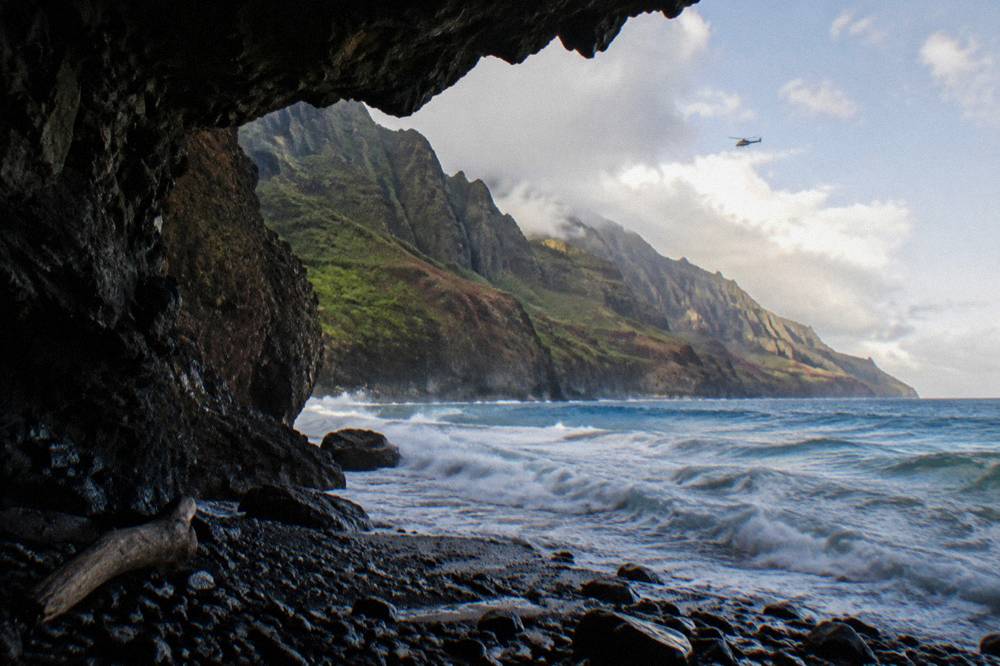
A doors-off flight adds open-door exposure and stricter passenger rules, not a different regulatory framework. Doors-off passengers are secured with 5-point harnesses anchored to the airframe in addition to seat belts, per the FAA requirements for open-door flights, and the listings enforce their own minimum ages and weight policies. The federal altitude, flotation, performance-plan and briefing rules from 136.75 apply identically whether the doors are on or off.
The doors-off listings on this roster make the trade explicit. The Air Kauai doors-off adventure, a 50-minute shared flight from the Lihue Airport heliport, supplies goggles and allows only a lanyarded phone on board, sets a minimum age of 10 with an outside-seat minimum of 16, and applies its own weight policy: an extra seat over 230 lbs, a combined 400 lbs for two, or an average of 190 lbs for groups of three or more. The Jack Harter MD500 doors-off flight, 60 minutes for at most four passengers, states a minimum age of 10 and a comfort seat over 250 lbs or a combined 400 lbs per pair. These are per-listing values, printed on each listing, and this site does not generalize them into a universal rule. Everything else covered here is indexed on Helicopter Tours Kauai.
| Listing | Format and doors | Minimum age on the listing | Weight policy on the listing |
|---|---|---|---|
| Air Kauai doors-off adventure, 50 minutes | Shared, up to 6, doors off | 10, and 16 for an outside or edge seat | Extra seat over 230 lbs, combined 400 lbs for two, average 190 lbs for groups of three or more |
| Jack Harter MD500 doors-off, 60 minutes | Small group, up to 4, doors off | 10 | Comfort seat over 250 lbs, combined 400 lbs for two |
| Jack Harter Heart of the Island doors-off, 18 minutes | Small group, up to 4, doors off | 10 | Comfort seat over 250 lbs, combined 400 lbs for two |
| Ali'i Kauai private doors-off flight, 75 minutes | Private, your group only, doors off | 7, and at least 40 lbs | Maximum 275 lbs per passenger, weighed at check-in |
| Mauna Loa private doors-off, 55 minutes | Private, your group only, doors off | 7, ages 7 to 11 sit next to a closed door | Maximum 275 lbs per person, 620 lbs total |
The harness point deserves its own sentence, because it is the single biggest structural difference a doors-off passenger experiences. A guest review on the doors-on ohana flight captures the reassurance side of flying with experienced pilots: "Awesome experience! Our pilot, Steve, was extremely experienced and I felt very safe. He has been flying in Kauai for over 30 years and knows the area well and gave a very entertaining experience full of history." That is one guest's words on one flight, not a safety claim, but it reflects what the harness, briefing and pilot-experience layers are designed to produce.
For readers who want the full doors-off picture, including what to wear and how photography works on an open-door flight, this site's doors-off helicopter guide for Kauai covers it in depth. The risk-relevant summary is short: doors-off means a 5-point harness, an age floor, a weight policy and a phone on a lanyard, and it does not mean flying outside the 136.75 rulebook.
What Operators Do Before Every Flight?
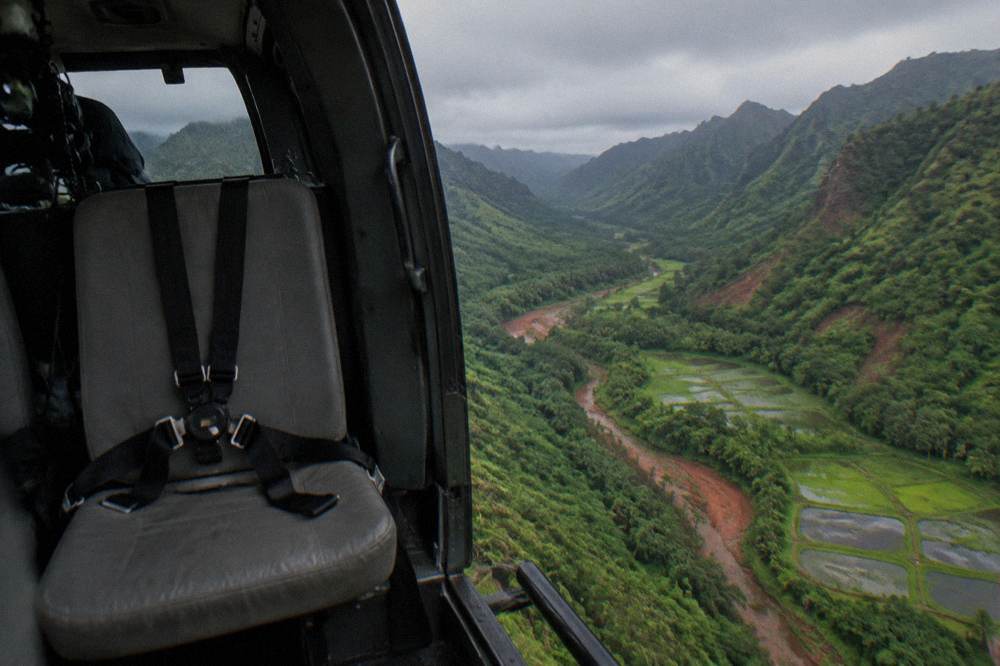
Before every departure, the operator completes a performance plan covering weight, center of gravity and hover limits as required by 136.75(b), weighs passengers at check-in to verify weight and balance, and briefs passengers on ditching and flotation for any ocean segment as required by 136.75(e). Weather holds and maintenance cancellations are rescheduled or refunded per the operators' stated policies. These steps are regulatory requirements and operator policy, not courtesies.
The weigh-in is the step passengers notice most, and it has a regulatory spine rather than an aesthetic one. Because the performance plan must be completed before each rotorcraft air tour flight, the operator needs actual weights, and the roster listings state their policies plainly: Safari's FAQ states 250 lbs or more may need an extra comfort seat, with a combined 420 lbs for two people; Blue Hawaiian's listing states an extra adjacent seat for each guest over 240 lbs; the private doors-off flights cap at 275 lbs per passenger. The seat a reader is assigned is determined by weight and balance, which is why this site's guide to how seat assignment works exists and why no operator will promise a specific seat in advance.
Weather is the other pre-flight gate, and on Kauai it is a real one. Trade winds and cloud cover over the Na Pali Coast and the island interior cause cancellations and route restrictions, especially later in the day, and the operators' stated policy is that weather cancellations are rescheduled or refunded. Every listing on this roster states free cancellation up to 24 hours before the start time for a passenger-initiated cancellation, and the operators' own terms cover the weather side. The practical risk-management advice that follows from this: book a morning slot if the schedule allows, since mornings generally offer the calmest winds, and treat a weather cancellation as the system working rather than a failure. If weather is giving you pause, a candid look at the disadvantages of a helicopter tour covers cost, seat and weight rules, noise, motion, and the short time in the air.
None of this promises a flight will run. The honest formulation, which this site uses everywhere, is that the listing states its policies and the reader checks the live listing for the date in question. A reader deciding between the 45-minute ohana doors-on flight and the private doors-off flight with all window seats is choosing between formats, not between levels of regulatory protection; both fly under the same rules.
Where The Honest Limits Of The Data Sit?
No verified source behind this site publishes a consolidated risk figure for Kauai helicopter tours: no accident rate, no per-year count and no comparative safety statistic. What exists is a specific rulebook, two documented and investigated incidents, Part 135 certification for most operators, and per-listing policies on weight, age and harnessing. A reader who wants a number will not find an honest one, and this site declines to invent one.
That refusal is the point of this article. The internet is full of confident comparative claims about helicopter safety, and almost none of them cite a verifiable source for Kauai specifically. There is no single, consolidated risk figure for helicopter tour safety to point to. What a reader can actually stand on is the material above: a Hawaii-specific federal rule with four concrete requirements, an NTSB process that produced a final finding on one incident and an open investigation on another, and operators whose certifications, performance planning and weather policies are checkable facts rather than marketing.
For readers whose remaining worry is the sealed-cabin experience, the most-reviewed tour on this roster is the doors-on option: the Blue Hawaiian 50-Minute Flight, 4.8 from 2,065 reviews, from $489 per person, a shared doors-on flight out of the Blue Hawaiian heliport at Lihue Airport. A guest review on that listing reads: "Must do experience, such a diverse island that can really only be appreciated by air. Smooth flight, great narration by our pilot Alex as we traversed the island. Definitely the highlight of our Hawaiian holiday." One review is one review, but a smooth-flight report on the roster's most-reviewed listing is a fair data point to set beside the incident record above.
Readers who want the deeper planning picture can start with this site's guide to helicopter tour safety on Kauai, and the site's overall comparison of which helicopter tour fits which traveler. The safety guide walks through the same regulation from the passenger's side of the briefing, and it is the natural next stop after this article. For the broader question of whether the flight is worth the money at all, this site's long-read on whether Kauai helicopter tours are worth it works the value side of the decision.
The last word belongs to the decision itself. Risk on a Kauai helicopter tour is real, regulated, documented and unquantified, and a reader who books one does so knowing the rulebook, the record and the operator policies in full. That is a better-informed position than either blind reassurance or unnamed fear, and it is the only position this site can honestly support.
Common Questions About Helicopter Tour Risk
How Risky Is A Helicopter Tour?
No verified source publishes a single risk figure for Kauai helicopter tours. The honest answer is that it is a regulated commercial flight governed by 14 CFR 136.75, flown mostly by Part 135 certified operators, with two documented investigated incidents on the island and no consolidated accident rate in the verified sources.
What Federal Rules Apply To Kauai Helicopter Tours?
14 CFR 136.75 requires a 1,500-foot altitude floor over Hawaii except for takeoff, landing, ATC clearance or FAA authorization, flotation capability for single-engine rotorcraft beyond the shore, a performance plan before every rotorcraft air tour flight, and a ditching briefing for passengers on ocean segments.
Have There Been Helicopter Crashes On Kauai?
The verified record contains two investigated incidents: the 11 July 2024 Robinson R44 crash off the Na Pali Coast, where the NTSB final report found mast bumping from high winds and downdrafts, and the 26 March 2026 Hughes 369D crash near Haena with three fatalities, where the preliminary report noted a pilot-reported vibration followed by a spin and the investigation remains open.
Are Doors-Off Helicopter Tours More Dangerous?
Doors-off flights add open-door exposure and stricter passenger rules, including 5-point harnesses anchored to the airframe, minimum ages of 10 on the shared doors-off listings and 7 on the private ones, and per-listing weight policies. The federal altitude, flotation, performance-plan and ditching rules apply identically with the doors on or off.
Why Do Helicopter Tours Weigh Passengers?
The weigh-in at check-in feeds the performance plan that 14 CFR 136.75(b) requires before every rotorcraft air tour flight, covering weight, center of gravity and hover limits. It is a regulatory requirement, and seat assignment is determined by weight and balance.
What Happens If Weather Cancels My Flight?
The operators' stated policy is that weather cancellations are rescheduled or refunded, and every listing on this roster states free cancellation up to 24 hours before the start time for a passenger-initiated cancellation. No operator promises a flight will run, and mornings generally offer the calmest winds.